Suspension Clamp Procurement Checklist for Cable Fit and Supplier Review
Choose a suspension clamp by matching the cable, suspension geometry, material specification, load behavior, and installation method to the line design. This checklist covers samples, packing, order quantity, lead time, documents, and supplier review questions.

A suspension clamp has to hold the specified conductor or optical cable without sliding, detaching, or creating concentrated stress. Start with the cable type and diameter, then review the clamp’s grip arrangement, deflection limit, material specification, and complete component set before requesting a quotation.
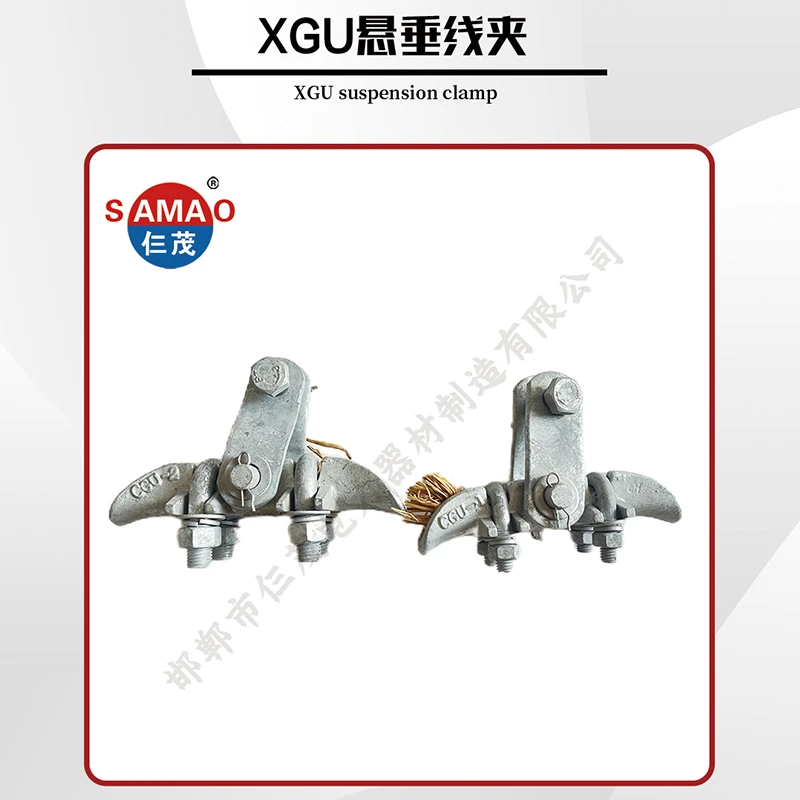
We supply Suspension Clamp for overhead power and communication line applications involving ADSS cable, OPGW cable, and various wires. Use the product match as the first gate in your purchasing review.
Confirm the cable and line configuration
The correct clamp depends on the cable or wire that will be suspended. Ask us to identify the compatible cable type and diameter for each line position, including the outside diameter of any aluminum wrapping belt or protective line where applicable.
Check these points against the project drawing:
- Cable type and diameter for each line position.
- Suspension point: linear pole tower connection, power tower, utility pole, or communication line.
- Wire arrangement: inner and outer pre-stranded wires, suspension head, hull, and matching connecting metal.
- Deflection condition: the maximum deflection angle for the wire or ground wire on both sides of the suspension point.
The hull and U-shaped screw limit the deflection angle. If the required angle is greater than the clamp’s limit, ask us about a double wire clip, tower-height adjustment, or special clamp design before approving a sample.
Inspect the construction and load path
A pre-stranded suspension clamp uses inner and outer spiral wires to distribute the grip around the cable. This arrangement helps protect optical cable from concentrated stress and bending stress, while also supporting vibration reduction.
For a sample inspection, check that:
- The inner and outer pre-stranded wires match the specified cable.
- The suspension head, hull, U-shaped screws, and connecting metal are all present.
- The spiral wires sit evenly around the cable without sharp contact points.
- The bolt and screw arrangement can be tightened as shown in the installation drawing.
- The grip force for the selected cable is greater than 10%-20% of the cable’s rated tensile strength.
- The clamp remains clear of the cable’s bending path at the required operating angle.
The clamp is designed to withstand the installation load in the vertical gear distance and to prevent sliding or detachment from the insulator string during normal or broken-line conditions. Request a sample that matches the final cable and fitting combination, not a visually similar size.
Review material and environmental fit
Material selection should match the line environment and the project specification. Ask us to identify the material and finish for each part of the quoted set, then check the selection against high humidity, salt spray, and extreme weather exposure.
Look for clean formed or cast surfaces, complete galvanizing or other specified finish, usable threads, and no visible cracks, burrs, deformation, or corrosion. Put the required construction and finish in the quotation and purchase order so the sample and production set can be compared consistently.
Use sampling as the release gate
A sample should represent the production configuration, cable size, material selection, and connection hardware that you will order. Record the sample’s cable compatibility, component list, dimensions, surface finish, marking, and installation method.
Fit the sample to the intended cable or a controlled test piece. Check that the pre-stranded wires distribute contact, the suspension head and hull align, and the U-shaped screws tighten without blocking the required movement before the maximum deflection angle is reached.
Ask us to explain the inspection method for grip force, dimensional conformity, surface treatment, and assembly completeness. If the project requires a tensile, salt-spray, material, or other performance check, include the test method and acceptance criteria in the inquiry and request the corresponding report for the offered configuration.
Set packaging and shipping requirements before ordering
Suspension clamps contain formed wires, screws, heads, hulls, and connecting hardware that can be bent, scratched, or mixed during handling. Ask for the proposed inner packing, outer carton or pallet arrangement, unit count per package, package marks, gross and net weights, and package dimensions.
Confirm that small hardware is bagged or boxed by set and that each package can be traced to the cable size and configuration. For export shipments, ask how the clamps will be protected from moisture, abrasion, and deformation during loading and transit. Approve the packing list format before dispatch so the received quantity can be checked by set.
Clarify quantity, price, and timing in the quotation
Ask us to quote the minimum order quantity for each clamp type, cable diameter, material selection, and custom configuration. Request the unit price basis, sample cost if applicable, tooling or special-design charges if applicable, packing basis, shipping term, payment terms, and quote validity in the same request.
Ask for lead time from drawing approval, sample approval, or order confirmation, and ask whether different sizes or special designs have different production schedules. State the required delivery location and target shipment window. The quotation should identify what starts the lead-time count and what documents will be sent before shipment.
Evaluate the supplier with a controlled review
Use the same technical request for every supplier so quotations can be compared on fit, material specification, components, deflection angle, grip basis, testing, packing, quantity, and timing. Give more weight to a supplier that can link the sample, drawing, inspection records, packing list, and shipment identification to the exact configuration being quoted.
Before approval, ask for the quality control process for material identification, dimensional inspection, surface treatment, assembly, and final packing. Ask how nonconforming pieces are separated, how revisions are controlled, and how replacement parts or mixed packages are handled. Keep the approved drawing and sample reference with the purchase order.
Before you order
Request the cable type, outside diameter, line position, environmental exposure, required deflection angle, quantity by size, destination, and packing needs in one inquiry. Approve a sample that matches the final cable and hardware set. Ask us to connect the drawing, inspection record, test reports, packing list, and shipment marks to the same configuration.
Before you approve the sample
Documents to prepare
Documents to request with the quotation
Request a document set suited to the line and destination:
- Product drawing showing cable range, component dimensions, assembly, and maximum deflection angle.
- Material declaration identifying the specified material and finish for each part.
- Grip-force or tensile test report for the quoted cable and clamp configuration, when required.
- Surface-treatment or corrosion test report when the environment or specification requires it.
- Sample inspection record with dimensional, visual, component, and fit checks.
- Installation instructions showing bolt tightening and the operating-angle limit.
- Commercial quotation matching the requested quantity, price, packing, shipping, payment, and timing terms.
- Packing list with package marks, set counts, weights, and dimensions.
Send us the cable type, cable diameter, line arrangement, environmental exposure, required deflection angle, quantity by size, destination, packing requirements, and requested documents. Ask for written confirmation that the sample and quotation use the same configuration.

About the author
The company
Handan Samao Electric Power Equipment ManufacturingCo., LTD.
Handan Sanmao Electric Power Equipment Manufacturing Co., Ltd. was founded in 1996. It is an earlier and larger enterprise specializing in the production of power equipment and power fittings in Handan City. The company covers an area of approximately more than 23,000 square meters, and the factory building area is more than 12,000 square meters. The sales area and office building are more than 2,000 square meters.…
About Us ↗Visit company website ↗-
Where a grounding electrode fits in lightning and equipment groundingNewsNov.19,2026
-
Parallel Groove Clamp Comparison: Materials, Wire Range and UsesNewsNov.10,2026
-
Suspension Clamp Questions: Cable Fit, Grip and DeflectionNewsNov.02,2026
-
Dead End Strain Clamp FAQ: Specifications, Selection and Ordering QuestionsNewsOct.30,2026
-
Choosing a Suspension Clamp: Application Fit and Specification ChecksNewsOct.22,2026
-
Premium Power Hardware co de vendas de equipamentos elétricos e incNewsJul.01,2026
-
Optimize Power Distribution with Painel Elétrico PersonalizadoNewsJun.29,2026