Wholesale Suspension Clamps: Durable Steel Solutions for Overhead Lines
The Imperative Role of wholesale suspension clamp in Modern Infrastructure
In the realm of power transmission, distribution, and various industrial applications, the integrity and longevity of overhead lines are paramount. Central to achieving this reliability is the selection and deployment of high-performance suspension clamps. These critical components are engineered to securely support conductors, optical ground wires (OPGW), and other overhead cables from utility poles or transmission towers, ensuring consistent mechanical integrity and electrical isolation. The demand for robust and dependable wholesale suspension clamp solutions continues to rise, driven by expanding global infrastructure projects, the need for enhanced grid stability, and the integration of renewable energy sources. This comprehensive guide delves into the technical intricacies, application diversity, and strategic importance of these essential hardware components for B2B professionals.
Understanding the specific design parameters, material science, and manufacturing processes behind these clamps is crucial for engineers, procurement managers, and project developers aiming to optimize their infrastructure investments. From ensuring conductor protection against fatigue stress to providing robust support in extreme weather conditions, the technological advancements in suspension clamp design have significantly improved their performance and versatility.
Industry Trends and Market Dynamics for Wholesale Suspension Clamp
The market for wholesale suspension clamp solutions is experiencing dynamic growth, propelled by several key global trends:
- Infrastructure Expansion: Rapid urbanization and industrialization, particularly in developing economies, necessitate extensive power grid expansions and upgrades. This drives demand for reliable overhead line hardware.
- Smart Grid Integration: Modern grids demand components that can withstand increased stresses from fluctuating loads and integrate with advanced monitoring systems. This pushes manufacturers towards higher performance and quality standards.
- Renewable Energy Integration: The proliferation of wind and solar farms requires new transmission infrastructure to connect these generation sources to the main grid, increasing the need for specialized clamps.
- Material Innovation: Advancements in metallurgy and polymer science lead to lighter, stronger, and more corrosion-resistant materials, improving the lifespan and performance of suspension clamps. For instance, the use of advanced aluminum alloys and improved galvanization techniques for steel suspension clamp products are becoming standard.
- Sustainability and Lifecycle Cost: A growing emphasis on sustainable practices and reducing total cost of ownership (TCO) means buyers prioritize clamps with extended service life, minimal environmental impact, and reduced maintenance requirements.
These trends underscore the importance of partnering with experienced suspension clamp suppliers who not only offer competitive pricing but also adhere to stringent quality standards and invest in R&D to meet future demands.
Technical Specifications and Design Principles
Suspension clamps are sophisticated mechanical devices designed for optimal load distribution and conductor protection. Their design involves a careful balance of material science, mechanical engineering, and compliance with international standards.
Core Components and Materials:
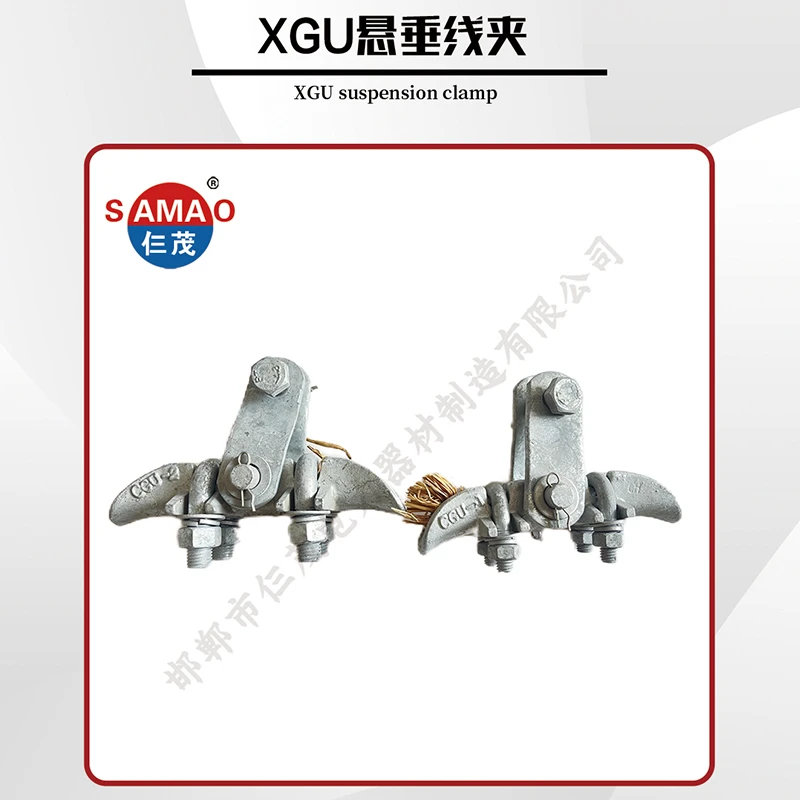
- Clamp Body & Keeper: Typically made from high-strength aluminum alloy (e.g., A356, ADC12) or ductile iron (e.g., GGG50) for robust mechanical support and excellent corrosion resistance. Aluminum is preferred for ACSR and AAAC conductors due to its lighter weight and galvanic compatibility. Ductile iron, often hot-dip galvanized, provides superior strength for heavier loads and larger conductors.
- Fasteners: Bolts, nuts, and washers are usually made from hot-dip galvanized steel to prevent rust and ensure long-term integrity, meeting standards like ASTM A153.
- Cotter Pins: Stainless steel or galvanized steel for securing clevis or trunnion connections.
- Liners/Inserts: Elastomeric materials (e.g., neoprene, EPDM) or aluminum alloy inserts are often used to cradle the conductor, preventing damage and reducing fatigue stress at the clamping point.
Key Performance Parameters:
- Ultimate Tensile Strength (UTS): The maximum load a clamp can withstand before breaking, crucial for structural integrity.
- Rated Breaking Strength (RBS): A design-specific breaking strength often used for overhead line hardware, typically 50-70% of UTS.
- Slip Strength: The minimum force required to cause the conductor to slip within the clamp. This ensures the clamp securely holds the conductor under various load conditions.
- Corona Performance: Design considerations to minimize corona discharge, especially for high voltage lines, by smoothing contours and avoiding sharp edges.
- Fatigue Endurance: The ability of the clamp and conductor system to withstand cyclic loading (e.g., wind-induced vibrations) without material degradation over its service life.
Types of Suspension Clamps:
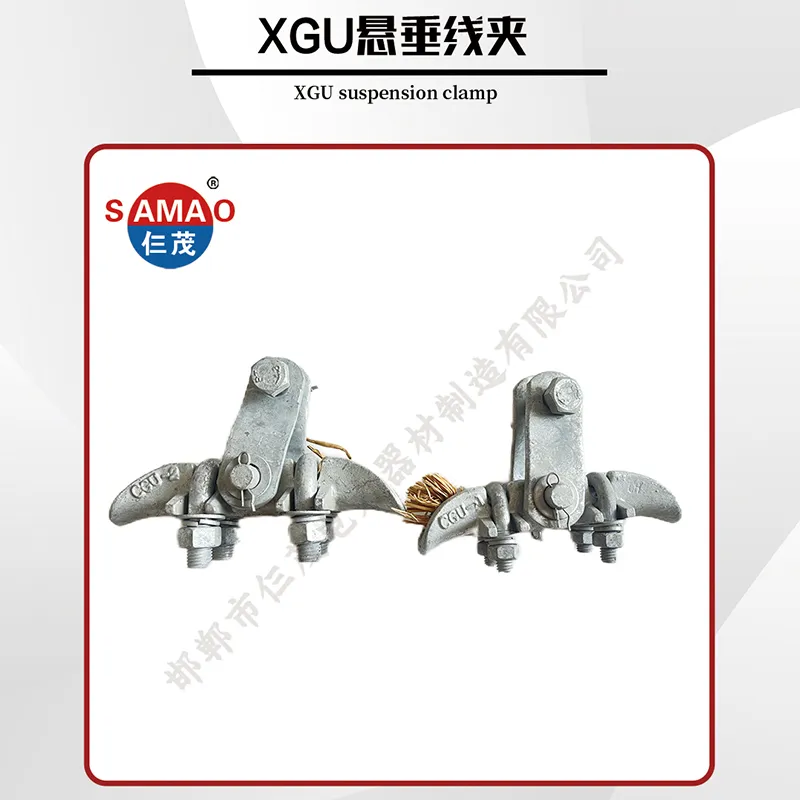
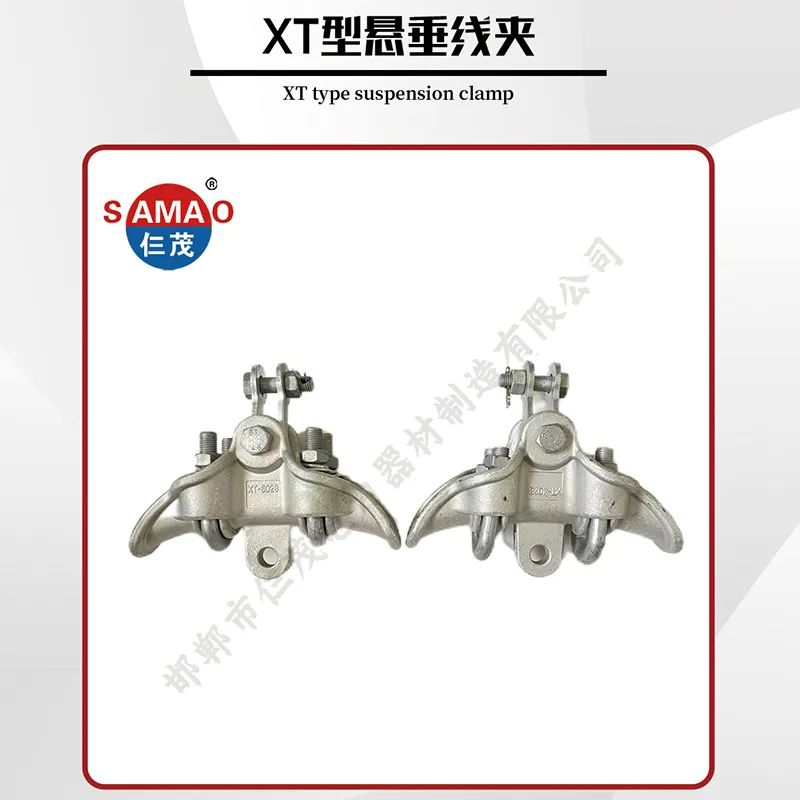
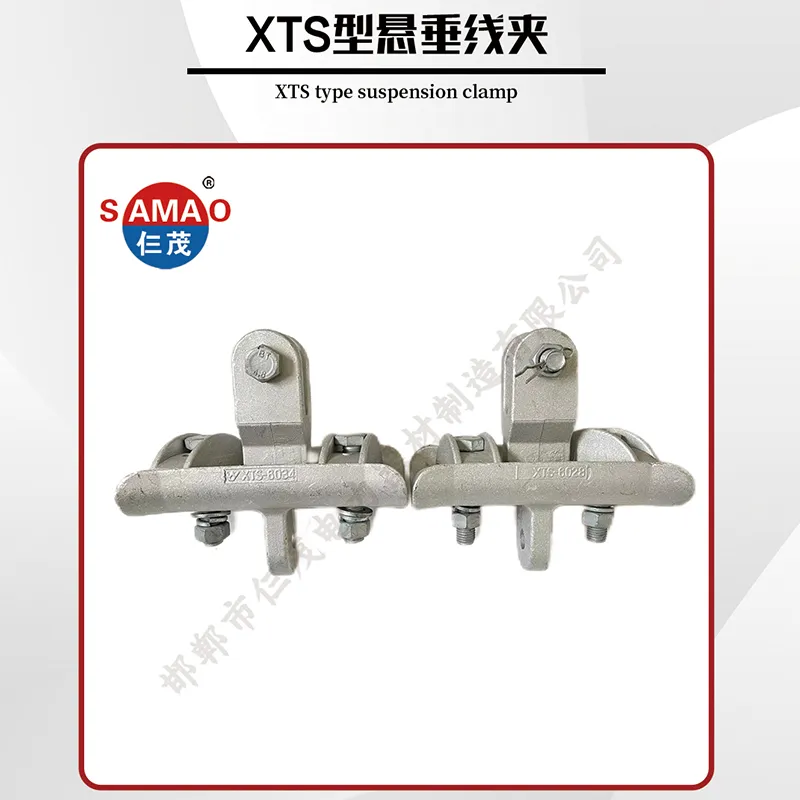
- Bolted Type Suspension Clamps: The most common, offering strong mechanical grip. Ideal for various conductor sizes and applications, including steel suspension clamp variants.
- Preformed Suspension Clamps: Utilize helically formed rods to provide a cushioned, distributed grip over a longer section of the conductor, significantly reducing stress concentration and fatigue. Excellent for sensitive conductors like OPGW or those in high-vibration areas.
- Angle Suspension Clamps: Specifically designed for line angles or deviation points where the conductor changes direction. These accommodate specific angular forces and often have reinforced designs. The angle suspension clamp is critical for maintaining mechanical stability at critical points in the line.
- Single & Double Suspension Clamps: Depending on the required load capacity and span length, clamps can be configured in single or double arrangements to distribute stress more effectively.
Typical Product Specification Table: Bolted Suspension Clamp (Aluminum Alloy)
| Parameter | Specification |
|---|---|
| Material | Aluminum Alloy (Body & Keeper), Hot-dip Galvanized Steel (Fasteners) |
| Conductor Diameter Range | 10mm - 40mm (Specific models vary) |
| Rated Breaking Strength (RBS) | 70 kN - 240 kN (Class Dependent) |
| Slip Strength (Min.) | 15% - 25% of Conductor UTS (ANSI C119.4) |
| Applicable Standards | ANSI C119.4, IEC 61284, ISO 9001 (Manufacturing) |
| Corrosion Resistance | Excellent (Salt Spray Test: >1000 hours) |
| Design Life | > 30 Years |
The Meticulous Manufacturing Process of Wholesale Suspension Clamp
The production of high-quality wholesale suspension clamp units involves a multi-stage, precision-driven process, ensuring each component meets rigorous performance and safety standards.
Process Flow Overview:
-
Material Sourcing & Inspection:
High-grade raw materials such as primary aluminum ingots (A356, A6061), steel billets (for forging), and ductile iron are procured from certified suppliers. Incoming materials undergo stringent quality checks, including chemical composition analysis (spectroscopy), mechanical property testing (tensile, hardness), and visual inspection to ensure compliance with international standards (e.g., ASTM B221 for aluminum, ASTM A536 for ductile iron).
-
Primary Forming (Casting/Forging):
- Casting (Aluminum/Ductile Iron): For complex clamp body shapes, sand casting or die casting techniques are employed. Molten metal is poured into molds, then allowed to cool and solidify. This process allows for intricate designs and cost-effective production for bulk orders of wholesale suspension clamp components.
- Forging (Steel Components): For high-strength components like clevis eyes or certain types of steel suspension clamp bodies, forging is used. Metal is heated and then shaped under intense pressure, resulting in superior grain structure, enhanced strength, and improved fatigue resistance compared to casting.
-
Precision Machining (CNC):
After primary forming, components undergo CNC (Computer Numerical Control) machining. This ensures precise dimensions, accurate drilling of bolt holes, and creation of smooth, burr-free surfaces critical for conductor contact and corona performance. Tolerances are typically held to within ±0.1mm, adhering to engineering drawings.
-
Surface Treatment:
- Hot-dip Galvanization: All steel components (bolts, nuts, washers, and steel suspension clamp bodies) are hot-dip galvanized according to ISO 1461 or ASTM A153. This process provides a thick, durable zinc coating that offers excellent corrosion resistance, extending the service life to over 30 years in harsh environments.
- Anodizing/Passivation (Aluminum): Aluminum alloy parts may undergo anodizing or passivation to enhance their natural oxide layer, improving corrosion resistance and surface hardness.
-
Assembly:
Components are assembled with precision. Inserts or liners are placed, and fasteners are hand-tightened or torqued to initial specifications. For preformed suspension clamp types, the helical rods are meticulously wound and secured.
-
Quality Control & Testing:
This is a critical stage to ensure product reliability and compliance with standards like ISO 9001 and ANSI C119.4. Testing protocols include:
- Mechanical Load Testing: Ultimate Tensile Strength (UTS) and slip strength tests are conducted on a statistically significant sample size using universal testing machines.
- Dimensional Accuracy: Verification of critical dimensions using calipers, micrometers, and gauges.
- Corrosion Resistance Tests: Salt spray testing (e.g., ASTM B117) to evaluate the effectiveness of galvanization and other surface treatments.
- Visual Inspection: Checking for defects, burrs, proper coating, and overall finish.
- Electrical Performance (if applicable): Corona and radio interference voltage (RIV) tests for high voltage clamps.
-
Packaging and Dispatch:
Finished clamps are securely packaged to prevent damage during transit. Bulk orders for wholesale suspension clamp units are often palletized and shrink-wrapped, with clear labeling for easy identification and inventory management. This ensures products arrive in pristine condition, ready for deployment.
This rigorous manufacturing and testing regimen ensures a projected service life of 30-50 years, even in challenging environments like coastal areas (high salinity) or industrial zones (chemical exposure). The target industries—petrochemical, metallurgy, water supply & drainage, and especially power transmission—all benefit from these durable and reliable components, contributing to energy saving through reduced line losses and offering exceptional corrosion resistance.
Application Scenarios and Target Industries
The versatility and robustness of suspension clamps make them indispensable across a wide array of critical infrastructure sectors.
Primary Applications:
- High-Voltage Transmission Lines: Supporting large diameter conductors (ACSR, AAAC, AAC) across long spans and high towers, often employing specialized designs like the preformed suspension clamp for enhanced conductor protection.
- Medium to Low Voltage Distribution Networks: Securing smaller conductors and service drops to utility poles, ensuring reliable power delivery to homes and businesses.
- Overhead Ground Wire (OHGW) and OPGW Systems: Supporting ground wires and optical fiber ground wires, which are crucial for lightning protection and communication networks. The delicate nature of OPGW often mandates the use of highly protective clamps to prevent fiber damage.
- Railway Electrification: Suspending catenary systems that supply power to electric trains, where consistent tension and vibration resistance are critical.
Target Industries:
- Power Utilities & Grid Operators: The primary consumers, requiring vast quantities of wholesale suspension clamp units for new construction, maintenance, and grid upgrades.
- Telecommunications: For supporting overhead fiber optic cables and traditional copper lines.
- Railway Infrastructure Developers: Essential for overhead contact line systems.
- Petrochemical Industry: Supporting cable trays and overhead pipelines within large industrial complexes, often in corrosive environments, requiring specialized materials for steel suspension clamp.
- Metallurgy: Similar to petrochemicals, for supporting utility lines and process infrastructure within steel mills and smelters.
- Water Supply & Drainage: For supporting electrical infrastructure associated with pumping stations and water treatment facilities.
Demonstrated Advantages in Typical Scenarios:
- Energy Saving: By ensuring stable and uniform conductor support, high-quality clamps minimize conductor movement, reducing abrasion and fatigue. This stability contributes to less conductor damage, which in turn reduces resistance and power losses over the lifespan of the line. Precise sag control achieved by proper clamping also optimizes electrical efficiency.
- Corrosion Resistance: Hot-dip galvanized steel and marine-grade aluminum alloys for wholesale suspension clamp products provide exceptional resistance to atmospheric corrosion, acid rain, and saline environments. This extends operational life and significantly reduces maintenance costs, especially in coastal or industrial areas.
- Extended Service Life: Designed and tested to stringent standards, modern clamps offer a service life exceeding 30 years, reducing the frequency of component replacement and associated labor costs.
- Enhanced Safety & Reliability: Superior mechanical strength and fatigue endurance translate into fewer line failures, ensuring greater public safety and uninterrupted service.
Technical Advantages of Advanced Suspension Clamps
Modern wholesale suspension clamp designs incorporate advanced features that deliver significant operational advantages over conventional designs.
- Optimized Conductor Protection: Advanced designs, especially those utilizing elastomeric inserts or armor rods (as seen in preformed suspension clamp types), minimize stress concentration at the clamping point. This effectively mitigates fatigue damage caused by aeolian vibration and sub-span oscillation, critical for prolonging conductor life.
- Superior Vibration Dampening: Some clamps are designed to integrate with or inherently provide vibration dampening properties, reducing the need for additional vibration dampers in certain applications. This is achieved through specific material combinations and clamp geometry that dissipates kinetic energy.
- Enhanced Load Distribution: The geometry of a well-engineered suspension clamp ensures that mechanical loads are evenly distributed across the conductor, preventing crimping or localized crushing that could lead to premature failure. This is particularly crucial for larger conductors and heavier loads.
- Ease of Installation and Maintenance: Designs that feature captive bolts or self-locking nuts simplify installation, reducing labor time and costs. Furthermore, robust construction means less frequent inspections and maintenance throughout the clamp's extensive service life, proving valuable for suspension clamp suppliers aiming for efficiency.
- Resistance to Extreme Environments: High-grade materials and superior surface treatments ensure performance integrity in conditions ranging from Arctic cold to desert heat, high humidity, and industrial pollution. Products like the steel suspension clamp are rigorously tested for performance in these diverse conditions.
- High Strength-to-Weight Ratio: Utilization of advanced aluminum alloys allows for strong yet lightweight clamps, which reduces structural loads on towers and poles, facilitating easier handling during installation.
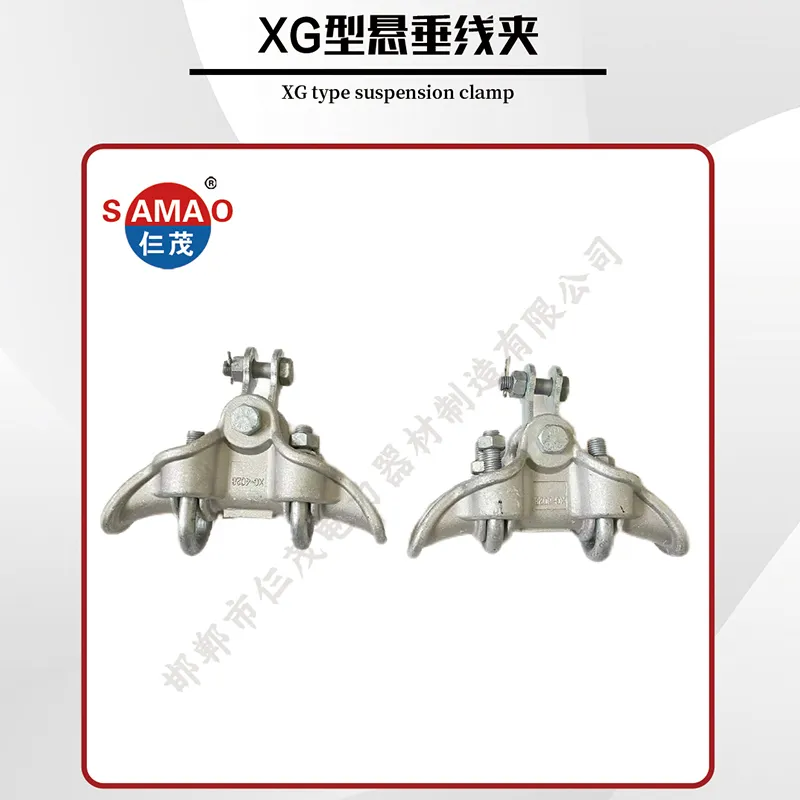
Vendor Comparison and Selection Criteria for Suspension Clamp Suppliers
Choosing the right suspension clamp suppliers is a strategic decision that impacts project timelines, operational costs, and long-term reliability. A rigorous evaluation process is essential.
Key Selection Criteria:
- Quality Certifications & Compliance: Verify ISO 9001 (Quality Management), ISO 14001 (Environmental Management), and specific product certifications like ANSI C119.4, IEC 61284. Request test reports from independent laboratories.
- Manufacturing Capability & Scale: Assess production capacity to handle bulk orders for wholesale suspension clamp, facility modernization, and adherence to quality control throughout the manufacturing process.
- R&D and Innovation: Suppliers who invest in R&D are more likely to offer cutting-edge solutions, such as enhanced preformed suspension clamp designs or corrosion-resistant materials for specific environmental challenges.
- Customization & Engineering Support: The ability to provide customized solutions for unique project requirements (e.g., specialized conductor types, extreme weather conditions) is invaluable.
- Supply Chain Robustness: Evaluate lead times, logistics capabilities, and inventory management to ensure timely delivery and minimize project delays.
- Technical Support & After-Sales Service: Access to expert technical guidance for installation, troubleshooting, and comprehensive warranty support.
- Pricing & Value Proposition: While cost-effectiveness is important, prioritize long-term value over upfront savings. Consider factors like product lifespan, maintenance costs, and performance guarantees.
- Reputation & Industry Experience: A track record of successful projects and positive client testimonials speaks volumes about a supplier's reliability and expertise.
Vendor Comparison Matrix (Illustrative):
| Criterion | Vendor A (Specialized) | Vendor B (Large-Scale) | Vendor C (Cost-Focused) |
|---|---|---|---|
| Product Quality Certifications | ISO 9001, ANSI, IEC, ASTM | ISO 9001, some regional standards | Basic ISO, often self-certified |
| Customization Capabilities | High (R&D team, rapid prototyping) | Moderate (standard modifications) | Limited (stock items only) |
| Lead Time (Standard Orders) | 2-4 Weeks | 4-6 Weeks | 6-8 Weeks |
| Technical Support | Excellent (Dedicated engineers) | Good (Standard support channels) | Basic (Product info only) |
| Warranty Period | 5-10 Years (Product Dependent) | 3-5 Years | 1-2 Years |
Customized Solutions for Specific Project Requirements
While standard wholesale suspension clamp products fulfill most requirements, complex infrastructure projects often demand tailored solutions. Reputable suspension clamp suppliers offer extensive customization capabilities.
- Unique Conductor Sizes & Types: Projects utilizing non-standard conductor diameters or specialized composite conductors require clamps with custom-designed gripping profiles and inserts to ensure optimal contact and prevent damage.
- Extreme Environmental Conditions: For installations in highly corrosive industrial areas, ultra-high temperature zones, or regions prone to severe icing, specialized materials (e.g., marine-grade stainless steel, high-performance polymers) or enhanced surface treatments may be necessary. For instance, a bespoke steel suspension clamp for a coastal refinery.
- Specialized Tower/Pole Designs: Custom attachment hardware, such as specific clevis or trunnion designs, might be needed to integrate seamlessly with unique tower geometries or existing infrastructure. This can include adapting an angle suspension clamp for a specific tower configuration.
- Optimized Performance Metrics: Engineers may specify higher slip strength, enhanced fatigue resistance, or particular corona performance characteristics that necessitate a custom design and rigorous testing.
- Integration with Smart Grid Technologies: Future-proof clamps might incorporate features or materials compatible with sensor integration for real-time monitoring of conductor tension, temperature, or vibration.
The customization process typically involves close collaboration between the client's engineering team and the supplier's R&D department, encompassing design iterations, finite element analysis (FEA), prototyping, and comprehensive testing to ensure the bespoke solution meets all performance and safety criteria.
Application Case Studies: Proving Reliability in Diverse Environments
Case Study 1: High-Voltage Transmission Line in Coastal Region
Client: Major National Power Utility, Southeast Asia
Challenge: Constructing a new 400kV transmission line spanning over 150 km along a highly corrosive coastline. The project required suspension clamps capable of withstanding extreme salt spray, high humidity, and typhoon-force winds while maintaining conductor integrity for large ACSR conductors (500mm2). Standard clamps exhibited rapid degradation in pre-project trials.
Solution: A specialized wholesale suspension clamp was developed. The clamp body and keeper were cast from a high-purity, marine-grade aluminum alloy, anodized for enhanced surface passivation. All fasteners (bolts, nuts, washers) were made of duplex stainless steel (ASTM A182 F51) instead of standard hot-dip galvanized steel, offering superior resistance to pitting and crevice corrosion. Additionally, a redesigned conductor seat profile with specific elastomeric inserts was implemented to minimize stress concentration and vibration fatigue. Extensive salt spray testing (exceeding 2000 hours as per ASTM B117) confirmed the enhanced corrosion resistance.
Outcome: Two years post-installation, routine inspections revealed minimal signs of corrosion or wear on the clamps, significantly outperforming previous installations. The utility projected a 20% increase in the line's service life compared to initial estimates with standard hardware, along with reduced maintenance costs.
Case Study 2: Railway Electrification Project in Mountainous Terrain
Client: Regional Railway Authority, Central Europe
Challenge: Electrification of a new high-speed rail line passing through undulating mountainous terrain with sharp curves and tunnels. The catenary system required robust suspension points for copper contact wires and messenger wires, capable of withstanding dynamic forces from high-speed trains, significant temperature variations, and the unique stresses at sharp directional changes where an angle suspension clamp was critical.
Solution: For straight sections, a highly robust ductile iron steel suspension clamp with a specialized vibration-dampening liner was used. At curve points and track deviation sections, custom-designed angle suspension clamp units were engineered. These clamps featured a reinforced clevis design and a wider conductor seating area to distribute angular forces more effectively. The materials for these clamps were hot-dip galvanized ductile iron (GGG50) for maximum strength, and bolts were Grade 8.8 hot-dip galvanized steel, ensuring high fatigue resistance. All designs underwent rigorous dynamic load simulations and physical tests to replicate operational vibrations and sudden tension changes.
Outcome: The customized clamp solutions provided exceptional stability and minimal wear after three years of continuous high-speed operation. The railway authority reported a significant reduction in scheduled maintenance interventions related to overhead line hardware, contributing to improved operational efficiency and safety across the network.
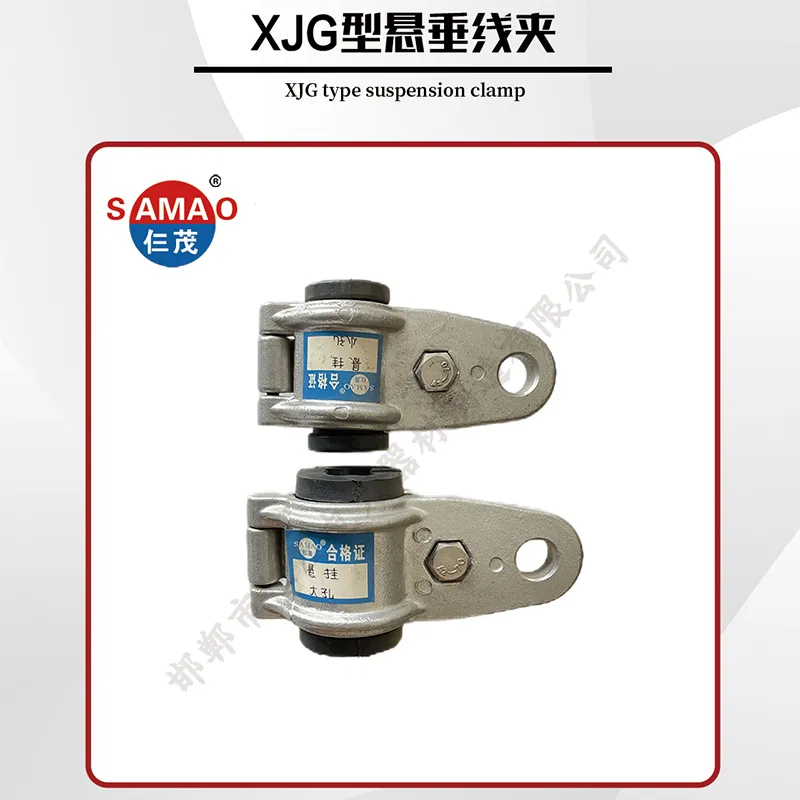
Ensuring Trustworthiness: FAQ, Lead Time, Warranty & Support
Frequently Asked Questions (FAQ) about Wholesale Suspension Clamp
- Q1: What are the primary factors to consider when selecting a wholesale suspension clamp?
- A1: Key factors include conductor type and diameter, rated breaking strength (RBS), slip strength requirements, environmental conditions (corrosion, temperature extremes), expected service life, and compliance with relevant industry standards (e.g., ANSI, IEC, ASTM).
- Q2: What is the difference between a bolted and a preformed suspension clamp?
- A2: Bolted clamps utilize bolts to secure the conductor between a clamp body and keeper, offering a firm grip. Preformed clamps use helically formed rods wrapped around the conductor, distributing the gripping force over a larger area, reducing stress concentration, and often providing better vibration dampening, particularly suitable for delicate conductors like OPGW.
- Q3: How do you ensure the corrosion resistance of steel suspension clamp products?
- A3: For steel clamps, hot-dip galvanization according to ISO 1461 or ASTM A153 is the primary method. This process applies a thick, uniform zinc coating that acts as a sacrificial layer, protecting the underlying steel from rust and extending the clamp's lifespan significantly.
- Q4: Are your products compatible with international electrical grid standards?
- A4: Yes, our suspension clamp suppliers ensure products are designed and tested to comply with major international standards such as ANSI C119.4 for overhead line hardware, IEC 61284 for tension and suspension assemblies, and ISO 9001 for quality management systems.
Lead Time and Fulfillment Details
We understand the critical nature of project timelines for our B2B clients. For standard wholesale suspension clamp orders, typical lead times range from 2 to 4 weeks, depending on order volume and specific product type. Customized solutions or highly specialized orders may require 6 to 8 weeks, factoring in design, prototyping, and testing phases. We maintain strategic inventory levels of high-demand items to facilitate quicker dispatch. Our global logistics network ensures efficient and reliable delivery to your project site, with options for expedited shipping if required. Clients receive regular updates on order status and shipping milestones.
Warranty Commitments and Customer Support
We stand behind the quality and performance of our products. All wholesale suspension clamp products come with a comprehensive warranty against manufacturing defects, typically ranging from 5 to 10 years, depending on the product type and application. Our warranty commitment is a testament to our confidence in our stringent manufacturing processes and quality control. In the unlikely event of an issue, our dedicated customer support team and technical engineers are available to provide prompt assistance, troubleshooting, and claims processing. We offer various support channels, including phone, email, and on-site technical visits for complex issues, ensuring minimal downtime and maximum operational continuity for your projects.
Conclusion: The Foundation of Reliable Infrastructure
The selection of high-quality wholesale suspension clamp is not merely a procurement decision but a strategic investment in the long-term reliability, safety, and efficiency of critical infrastructure. As power grids expand and evolve, and as other industries increasingly rely on overhead systems, the demand for meticulously engineered, durable, and environmentally resilient clamping solutions will only intensify. By understanding the intricate manufacturing processes, adhering to rigorous technical specifications, and partnering with authoritative suspension clamp suppliers who prioritize quality and customization, B2B decision-makers can ensure their projects are built on a foundation of uncompromised strength and longevity. Our commitment to expertise, experience, authoritativeness, and trustworthiness underpins every product, providing peace of mind and superior performance for the most demanding applications.
References
- ANSI C119.4: American National Standard for Connectors for Use in Overhead Distribution Systems.
- IEC 61284: Overhead lines - Requirements and tests for fittings.
- ASTM A153/A153M: Standard Specification for Zinc Coating (Hot-Dip) on Iron and Steel Hardware.
- ISO 9001: Quality management systems – Requirements.
- CIGRÉ Technical Brochure 298: Guidelines for Prevention of Aeolian Vibration Damage to Overhead Conductors.
-
Laundry Efficiency Guide with pengapit ampaian dengan cangkuk iNewsApr.16,2026
-
Optimizing Power Infrastructure with the pengapit ampaian tnbNewsApr.09,2026
-
Comprehensive Guide to Selecting the Right pengapit penggantungan untuk kabel lt ab SolutionsNewsApr.07,2026
-
Comprehensive Guide to Pengapit Talian Penghantaran for Secure Package DeliveryNewsApr.04,2026
-
Comprehensive Guide to Pemasangan Pengapit Penggantungan for Overhead Cabling SystemsNewsMar.31,2026
-
Comprehensive Guide to Pengapit Ampaian yang Telah Dibentuk for Construction SafetyNewsMar.28,2026
-
Comprehensive Guide to Pengapit Ampaian Besi for Scaffolding SafetyNewsMar.26,2026