Tension Clamp and Related Fixtures: Key Components for Secure Wire Installation and Tension Management
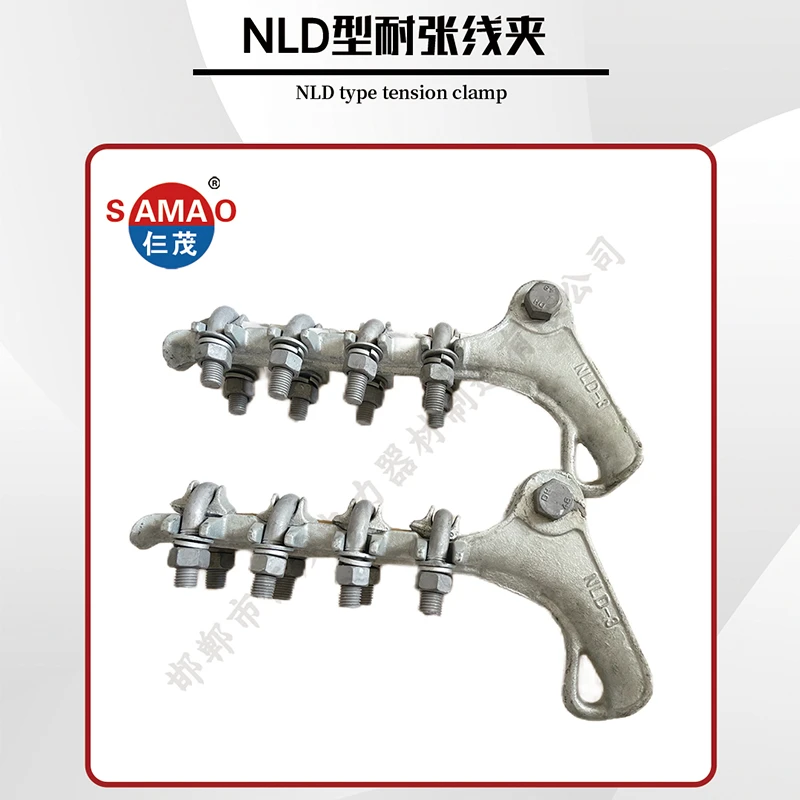
Tension Clamp, also commonly referred to as strain clamp or dead end clamp, is a critical component in wire and cable installation systems, designed to securely fasten wires, bear the tension of the wire throughout its service life, and mount the wire onto tension strings or tower structures. This clamp plays an irreplaceable role in maintaining the stability of overhead lines, especially in long-span installations where wire tension is significant; it prevents wire slippage or detachment even under extreme weather conditions like strong winds or ice accumulation. Unlike general-purpose clamps, Tension Clamp is engineered with a robust structure that balances high gripping force and wire protection—its inner contact surface often features a serrated or textured design to enhance friction with the wire, while some models add a protective layer to avoid damaging the wire’s outer insulation. In overhead power transmission and distribution networks, Tension Clamp is widely used at line terminals, corner points, or where the wire direction changes, as it can effectively distribute the wire’s tension to the supporting structures, ensuring the entire line remains in a stable tension state.
Tension Clamp works in close coordination with Dead End Clamp, as the latter is essentially a specialized type of Tension Clamp designed for terminal connections of wires
Dead End Clamp is primarily used at the endpoints of overhead lines, such as where the wire connects to a substation or a terminal tower, to fix the wire firmly and transfer the full tension of the wire to the supporting structure. This clamp is often designed with a more compact structure to fit terminal installation spaces, and its clamping mechanism is optimized for maximum tension resistance—some high-capacity Dead End Clamps can withstand tensions of up to several thousand Newtons, making them suitable for high-voltage transmission lines. In addition to tension bearing, Dead End Clamp also provides a secure connection that prevents moisture or corrosion from entering the wire terminal, extending the service life of the line. When paired with Tension Clamp in a line system, Dead End Clamp ensures the terminal end of the wire is as stable as the middle span, forming a complete tension management system.
End Clamp, though similar in name to Dead End Clamp, has distinct application scenarios and functional focuses compared to Tension Clamp
End Clamp is mainly used for securing the ends of shorter wire segments, such as in indoor wiring, small-scale overhead lines for street lighting, or temporary construction lines, rather than bearing large tensions like Tension Clamp. This clamp is typically smaller in size and lighter in weight, with a simple installation process that allows for quick attachment without complex tools. Unlike Tension Clamp, which requires precise alignment with tension strings, End Clamp is often mounted directly onto wall brackets or small poles, and its clamping force is adjusted to match the lower tension of short wires. However, End Clamp still retains the core function of preventing wire end slippage, and in some cases, it can be used as an auxiliary component with Tension Clamp to reinforce the end stability of longer lines.
Constant Tension Hose Clamps differ significantly from Tension Clamp in terms of application scope, as they are specialized for securing hoses rather than wires, but they share the common principle of maintaining constant tension
Unlike Tension Clamp, which bears variable tension from wires, Constant Tension Hose Clamps are designed to automatically adjust their clamping force to maintain a consistent level, even as the hose expands or contracts due to temperature changes or pressure fluctuations. This feature makes them ideal for automotive, industrial, or plumbing systems where hoses carry fluids or gases—they prevent leaks caused by loose clamping while avoiding hose damage from over-tightening. While Constant Tension Hose Clamps do not interact directly with Tension Clamp in wire systems, their tension management technology reflects the same engineering logic of balancing stability and protection, which is also a key design concept in Tension Clamp development.
Strain Relief Clamp is a complementary component that works with Tension Clamp to reduce stress on wire connections, especially in areas where wires enter equipment or change direction
Unlike Tension Clamp, which focuses on bearing the overall tension of the wire, Strain Relief Clamp is designed to distribute localized stress—for example, at the point where a wire connects to a junction box or a transformer—to prevent wire fatigue or insulation damage caused by repeated bending or tension concentration. This clamp is often installed near Tension Clamp in overhead line systems, especially in industrial settings or electrical equipment installations, where it acts as a "buffer" to absorb minor tension fluctuations that Tension Clamp does not need to handle. By reducing localized strain, Strain Relief Clamp extends the service life of the wire and enhances the overall reliability of the system, making it an important auxiliary component alongside Tension Clamp.
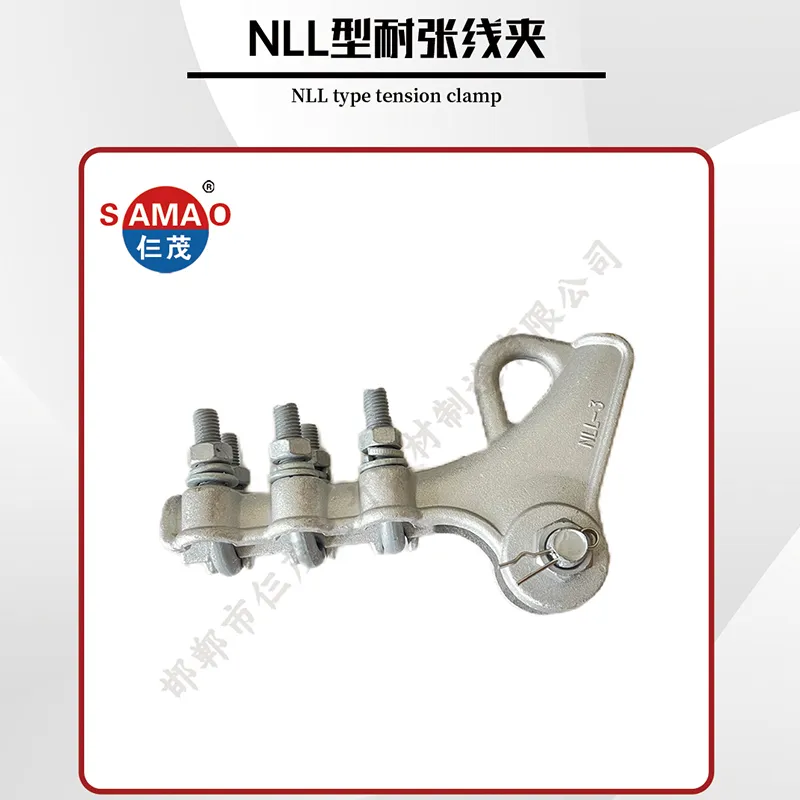
In summary, Tension Clamp, as the core component, plays a leading role in wire tension management and secure installation, while Dead End Clamp, End Clamp, Constant Tension Hose Clamps, and Strain Relief Clamp each serve specialized functions in different scenarios. Dead End Clamp extends Tension Clamp’s capabilities to line terminals, End Clamp caters to low-tension short-wire ends, Constant Tension Hose Clamps apply tension management to hose systems, and Strain Relief Clamp complements Tension Clamp by reducing localized stress. Together, these clamps form a comprehensive tension control and securement system, ensuring stability, safety, and durability in wire, cable, and hose installations across various industries. Whether in large-scale overhead power lines or small-scale equipment connections, their coordinated use underpins the reliable operation of critical infrastructure.
Tension Clamp FAQs
1. What is the primary function and definition of a tension clamp in electrical engineering?
A tension clamp, also known as a strain clamp or dead-end clamp, is a critical metal fixture used in electrical engineering to securely fasten conductors such as wires or cables. Its primary role is to withstand the full tensile load of the conductor, ensuring it remains anchored to support structures like tension insulator strings or utility poles. This device is essential for maintaining structural integrity in overhead power lines, especially at points where the line terminates, changes direction, or requires splicing. Designed to handle significant mechanical stress, tension clamps ensure stability and safety in electrical distribution systems by preventing disconnection due to environmental forces or continuous tension.
2. How are tension clamps categorized based on their structural design and operational use?
Tension clamps are broadly classified into two main categories according to their structural design and functional application. The first type includes clamps that bear the entire tensile load of the conductor or shield wire but do not function as electrical conductors. These clamps, such as bolt-type or wedge-type variants, can be detached and reused after installation, offering flexibility and cost-effectiveness. The second type acts as both a mechanical anchor and an electrical conductor. Once installed, these clamps become permanent fixtures and cannot be removed, often referred to as "dead-end clamps." Their installation must adhere to strict electrical and safety standards to ensure proper conductivity and mechanical reliability.
3. What advantages do tension clamps provide in power line installations and maintenance?
Tension clamps offer several key advantages in power line systems. They effectively prevent short circuits caused by animals or foreign objects bridging connections, enhance safety by reducing the risk of electrical accidents due to contamination, moisture, or ice formation, and provide resistance against corrosion from harsh environmental factors like acid rain or salt spray. Additionally, their enclosed design minimizes the risk of accidental human contact with live parts, thereby preventing injuries. Featuring a snap-on or crimped structure, tension clamps simplify installation, allow for reuse, and require minimal tools, significantly reducing labor time and maintenance costs while ensuring long-term durability.
4. What are the common types of tension clamps based on their specific applications and conductor types?
Tension clamps are diversified into multiple types tailored to specific applications and conductor materials. For optical cables, options include small-tension wedge clamps, medium-tension clamps, and high-tension clamps designed for ADSS (All-Dielectric Self-Supporting) or OPGW (Optical Ground Wire) cables. For electrical conductors, there are preformed tension clamps suitable for aluminum-alloy wires, steel-cored aluminum strands, and insulated conductors. Additionally, preformed types for ground wires and stay wires, such as those used with steel strands or aluminum-clad steel wires, are common. These clamps can also be grouped by installation methods, including compression-type and bolt-type variants, each engineered to meet precise mechanical and environmental demands.
5. What key characteristics ensure the reliability and performance of tension clamps in demanding environments?
Tension clamps are engineered with several vital characteristics to ensure reliability and high performance. They exhibit exceptional mechanical strength, with a grip force exceeding 95% of the conductor's calculated ultimate tensile strength (CUTS), ensuring secure attachment without slippage. The design promotes uniform stress distribution across the conductor, minimizing damage and enhancing vibration resistance, which extends the lifespan of the wiring system. Installation is straightforward, often requiring no specialized tools, and visual inspection suffices for quality assurance, reducing training needs. Constructed from materials compatible with the conductor, such as corrosion-resistant alloys, these clamps withstand electrochemical degradation and extreme weather conditions. Optional anti-theft features further augment their security in outdoor applications.
-
Laundry Efficiency Guide with pengapit ampaian dengan cangkuk iNewsApr.16,2026
-
Optimizing Power Infrastructure with the pengapit ampaian tnbNewsApr.09,2026
-
Comprehensive Guide to Selecting the Right pengapit penggantungan untuk kabel lt ab SolutionsNewsApr.07,2026
-
Comprehensive Guide to Pengapit Talian Penghantaran for Secure Package DeliveryNewsApr.04,2026
-
Comprehensive Guide to Pemasangan Pengapit Penggantungan for Overhead Cabling SystemsNewsMar.31,2026
-
Comprehensive Guide to Pengapit Ampaian yang Telah Dibentuk for Construction SafetyNewsMar.28,2026
-
Comprehensive Guide to Pengapit Ampaian Besi for Scaffolding SafetyNewsMar.26,2026