Aluminum Ground Rod and Chemical Earthing Solutions: Essential Components for Reliable Electrical Grounding
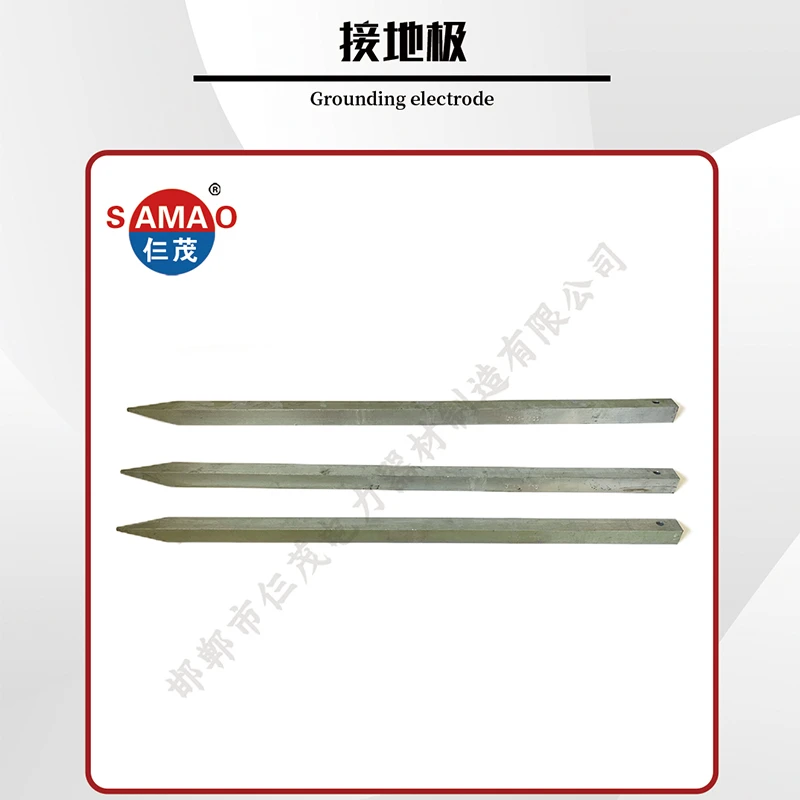
Aluminum Ground Rod is a widely used grounding component in electrical systems, designed to establish a stable connection between electrical equipment and the earth, thereby diverting fault currents and ensuring safety. Unlike traditional galvanized steel rods, Aluminum Ground Rod offers advantages such as lightweight construction, excellent corrosion resistance, and easy installation, making it suitable for various soil types—from dry sandy soils to moderately moist clay soils. Its surface is often treated with anti-oxidation coatings to enhance durability, preventing rust or degradation even in harsh environmental conditions like high humidity or exposure to industrial pollutants. In residential, commercial, and industrial settings, Aluminum Ground Rod serves as a foundational element of grounding systems, working in tandem with other components to maintain consistent earth contact and reduce the risk of electrical shocks or equipment damage.
Aluminum Ground Rod is frequently paired with Chem Rod Grounding Electrode to optimize grounding performance in challenging soil environments
Chem Rod Grounding Electrode, also known as a chemical grounding rod, integrates the conductive properties of aluminum with chemical compounds that improve soil conductivity. This electrode contains a porous inner core filled with electrolytes; when installed, the electrolytes slowly seep into the surrounding soil, reducing soil resistivity and ensuring a low-resistance path for fault currents. Unlike standard Aluminum Ground Rod, which relies solely on direct soil contact, Chem Rod Grounding Electrode actively modifies the soil around it, making it ideal for areas with high soil resistivity, such as rocky terrain or arid regions. When used together, Aluminum Ground Rod and Chem Rod Grounding Electrode create a robust grounding system that combines the structural stability of aluminum with the conductivity-enhancing benefits of chemicals.
Chemical Earth Rod is another key component in modern grounding systems, often used interchangeably with Chem Rod Grounding Electrode but with a focus on long-term soil conditioning
Similar to how Aluminum Ground Rod provides a physical conductor, Chemical Earth Rod delivers a sustained supply of conductive compounds to the soil, maintaining low resistivity over time. This rod typically features a hollow aluminum or copper outer tube (compatible with Aluminum Ground Rod installations) and an inner chamber filled with non-toxic, corrosion-inhibiting chemicals. As the chemicals dissolve gradually, they form a conductive layer around the rod, ensuring continuous electrical contact with the earth. In areas where soil conditions change seasonally—such as regions with freezing winters or dry summers—Chemical Earth Rod helps stabilize grounding resistance, complementing the performance of Aluminum Ground Rod.
Chemical Earthing for Home is a specialized application of chemical grounding technology, tailored to meet the safety needs of residential electrical systems
In homes, Aluminum Ground Rod is often the primary conductor, but Chemical Earthing for Home enhances its effectiveness by addressing common residential soil challenges, such as compacted soil or low moisture levels. A typical home chemical earthing setup includes an Aluminum Ground Rod driven into the ground near the electrical service panel, connected to a Chemical Earth Rod that releases electrolytes to improve soil conductivity. This combination ensures that fault currents from household appliances or wiring issues are quickly diverted to the earth, protecting residents from electric shocks and preventing damage to electronics. Chemical Earthing for Home is also easy to maintain, requiring only occasional checks to ensure the chemical chamber is properly filled, making it a practical choice for homeowners.
Chemical Electrode Earthing is a comprehensive grounding solution that integrates Chemical Earth Rod, conductive chemicals, and connecting hardware to form a low-resistance earthing network
When paired with Aluminum Ground Rod, Chemical Electrode Earthing creates a system that is both durable and highly efficient. The Chemical Electrode Earthing unit typically consists of a metal electrode (often aluminum, matching the Aluminum Ground Rod) surrounded by a backfill material made of bentonite or graphite-based compounds. This backfill not only improves soil conductivity but also protects the Aluminum Ground Rod from corrosion, extending its lifespan. In industrial facilities or commercial buildings where high fault currents are a concern, Chemical Electrode Earthing works with Aluminum Ground Rod to provide a reliable path for current dissipation, ensuring compliance with electrical safety standards.
In summary, Aluminum Ground Rod serves as the backbone of modern grounding systems, offering durability and versatility across various applications. When combined with Chem Rod Grounding Electrode, Chemical Earth Rod, Chemical Earthing for Home, and Chemical Electrode Earthing, it forms a comprehensive solution that addresses diverse soil conditions and safety requirements. Chem Rod Grounding Electrode and Chemical Earth Rod enhance conductivity in challenging soils, while Chemical Earthing for Home adapts these technologies to residential needs, and Chemical Electrode Earthing creates robust networks for high-demand settings. Together, these components ensure that electrical systems—whether in homes, businesses, or industries—maintain safe, low-resistance grounding, protecting equipment, personnel, and property from electrical hazards. As grounding technology continues to evolve, the integration of Aluminum Ground Rod with chemical earthing solutions remains a key strategy for reliable electrical safety.
Aluminum Ground Rods FAQs
1. What are the common specifications and applications of aluminum ground rods?
Aluminum ground rods are typically used in electrical grounding systems to provide a safe path for fault currents to dissipate into the earth. These rods are often made from high-conductivity aluminum alloys and comply with standards such as GB/T 3954 for electrical-grade aluminum rods. Common specifications include diameters ranging from 9.0 mm to 20.0 mm, with tensile strengths varying between 60 MPa and 150 MPa depending on the alloy type. They are widely employed in power transmission networks, renewable energy infrastructure (e.g., solar farms and wind turbines), and industrial electrical systems due to aluminum’s lightweight properties, cost-effectiveness, and corrosion resistance.
2. How do aluminum ground rods compare to copper in terms of performance and cost?
Aluminum ground rods offer significant advantages in weight reduction, being approximately 50% lighter than copper, which simplifies transportation and installation. While copper has higher conductivity, aluminum’s cost efficiency (often at least one-third cheaper than copper) makes it preferable for large-scale projects like grid upgrades and renewable energy installations. Additionally, aluminum’s natural oxide layer provides excellent corrosion resistance, especially in harsh environments such as coastal areas. However, proper design and alloy selection (e.g., AAAC or ACSR types) are crucial to ensure mechanical strength and electrical performance match application requirements.
3. What are the installation considerations for aluminum ground rods in different soil conditions?
Installation of aluminum ground rods requires careful planning based on soil resistivity and environmental conditions. For standard soils, rods are driven directly into the ground using mechanical drivers or installed in pre-drilled holes with concrete foundations for stability. In corrosive soils (e.g., high salinity or acidity), additional protective measures like specialized coatings or use of alloys with enhanced corrosion resistance are recommended. The depth of installation typically ranges from 1 to 2 meters to achieve low earth resistance, and techniques such as ground enhancement materials (e.g., bentonite) may be used in rocky or high-resistivity terrains to improve conductivity.
4. What standards and testing methods ensure the reliability of aluminum ground rods?
Aluminum ground rods must adhere to international standards such as GB/T 3954, which specifies mechanical properties (e.g., tensile strength and elongation) and electrical properties (e.g., resistivity ≤0.02801 Ω·mm²/m). Testing includes resistivity checks per GB/T 3048.2, dimensional accuracy verification, and corrosion resistance assessments. For critical applications, third-party certifications and compliance with regional safety regulations (e.g., IEC or ANSI standards) are essential. Regular field tests, including earth resistance measurements using fall-of-potential methods, ensure ongoing performance and safety.
5. How are aluminum ground rods integrated into modern renewable energy systems?
In renewable energy projects, aluminum ground rods are vital for grounding solar panel mounts, wind turbine foundations, and substation equipment. For example, solar ground-mounted systems use aluminum rods to secure structures via concrete foundations or ground screws, ensuring stability against wind and snow loads. Their lightweight nature simplifies logistics for remote installations, while compatibility with bifacial panels and modular designs enhances scalability. Innovations like pre-assembled components reduce on-site labor, and integration with monitoring systems allows for real-time grounding performance tracking in smart grids.
-
Laundry Efficiency Guide with pengapit ampaian dengan cangkuk iNewsApr.16,2026
-
Optimizing Power Infrastructure with the pengapit ampaian tnbNewsApr.09,2026
-
Comprehensive Guide to Selecting the Right pengapit penggantungan untuk kabel lt ab SolutionsNewsApr.07,2026
-
Comprehensive Guide to Pengapit Talian Penghantaran for Secure Package DeliveryNewsApr.04,2026
-
Comprehensive Guide to Pemasangan Pengapit Penggantungan for Overhead Cabling SystemsNewsMar.31,2026
-
Comprehensive Guide to Pengapit Ampaian yang Telah Dibentuk for Construction SafetyNewsMar.28,2026
-
Comprehensive Guide to Pengapit Ampaian Besi for Scaffolding SafetyNewsMar.26,2026