Parallel Groove Clamp and Its Associated Connectors: Essential Power Fittings for Wire Connection
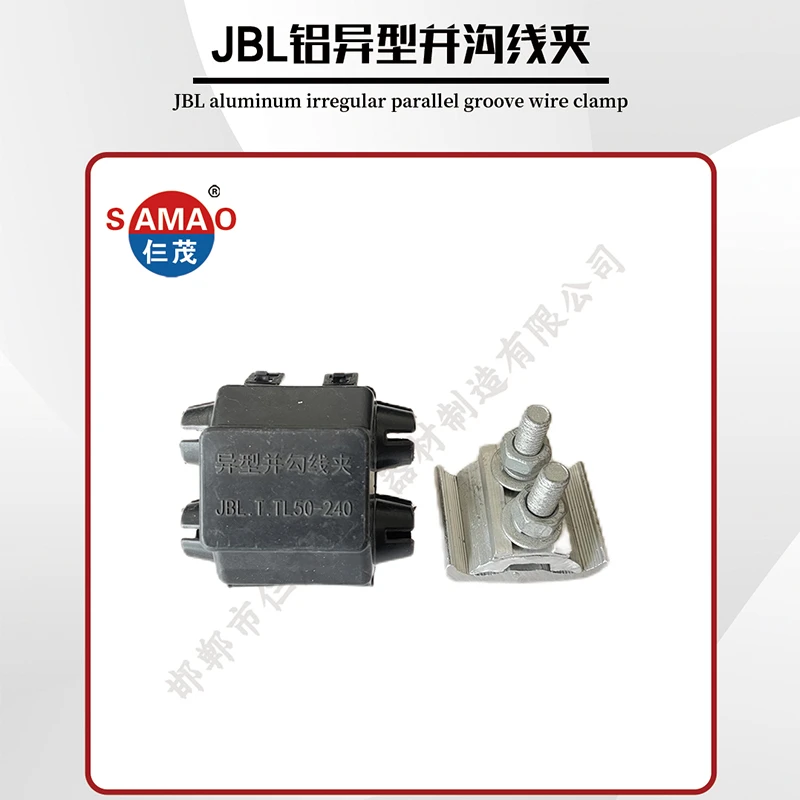
Parallel groove clamp is a type of power fittings mainly used for the connection of wires and lightning conductors, especially suitable for parts that do not bear tension. It features a compact structure with two or more parallel grooves on its body, which can securely hold multiple wires together while maintaining good electrical conductivity. Made from high-quality materials such as aluminum alloy or copper-clad aluminum, Parallel Groove Clamp exhibits excellent corrosion resistance, ensuring stable performance even in harsh outdoor environments like high humidity, strong winds, or industrial dust. Unlike other wire connectors that require complex installation tools, this clamp can be installed with simple hand tools, reducing labor costs and construction time. It is widely applied in overhead power lines, distribution networks, and lightning protection systems, playing a crucial role in ensuring the smooth transmission of electrical current and the safety of power equipment.
Parallel groove clamp is designed to accommodate different wire sizes, making it highly versatile in various power connection scenarios
Its groove width and depth are precisely machined to match common wire diameters, from small-gauge lightning conductors to medium-gauge power transmission wires. When in use, the wires are placed into the parallel grooves, and the clamp is tightened with bolts to create a firm and low-resistance connection. This design not only prevents wire slippage but also minimizes contact resistance, avoiding overheating caused by poor current transmission. In addition, some Parallel Groove Clamp models come with anti-loosening washers or locknuts, which enhance the stability of the connection and prevent bolt loosening due to long-term vibration from wind or equipment operation.
Parallel Groove Connector, a close counterpart to Parallel Groove Clamp, shares similar functional principles but often features a more streamlined structure for specific connection needs
While Parallel Groove Clamp is typically used for multi-wire connections, Parallel Groove Connector is often preferred for two-wire parallel connections, such as in branch line installations or wire extension projects. It also uses parallel grooves to hold wires, but its body may be smaller in size, making it suitable for narrow installation spaces. Like Parallel Groove Clamp, Parallel Groove Connector is made from conductive and corrosion-resistant materials, ensuring reliable electrical contact and long service life. In power distribution systems, these two fittings are often used interchangeably depending on the number of wires and installation requirements, complementing each other to meet diverse connection demands.
Hubbell Parallel Groove Clamp is a specialized variant of Parallel Groove Clamp that adheres to strict manufacturing standards to ensure high performance and safety
It retains the core design of Parallel Groove Clamp, including parallel grooves and bolted fastening, but incorporates advanced material treatments such as anti-oxidation coatings and precision machining to enhance durability and conductivity. Hubbell Parallel Groove Clamp is particularly suitable for high-voltage power systems where connection reliability is critical, as it can maintain stable performance under high current loads and extreme temperature fluctuations. It is also designed to comply with international electrical safety standards, making it a trusted choice in large-scale power projects, such as urban power grids and industrial power supply systems.
Parallel Connector, a broader term that encompasses Parallel Groove Connector and other similar fittings, serves as a general solution for parallel wire connections in power systems
While it shares the same goal of secure wire connection as Parallel Groove Clamp, Parallel Connector may include designs with different clamping mechanisms, such as spring-loaded or compression-type structures, to adapt to specific application scenarios. For example, in temporary power installations, a lightweight Parallel Connector can be quickly attached to wires without the need for bolt tightening, improving construction efficiency. However, in permanent power systems, Parallel Groove Clamp is still preferred for its superior stability and long-term reliability, as its bolted design ensures a consistent connection force over time.
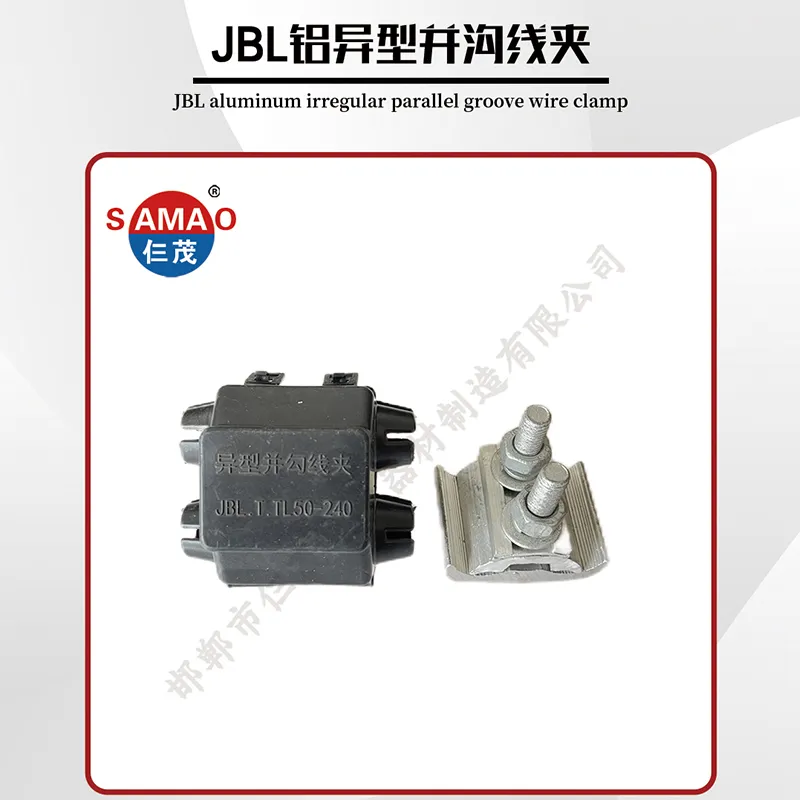
In summary, Parallel Groove Clamp stands as a core component in power connection systems, providing a reliable, easy-to-install solution for wire and lightning conductor connections. Its versatility in accommodating different wire sizes and resistance to harsh environments make it indispensable in overhead power lines, distribution networks, and lightning protection setups. Parallel Groove Connector complements Parallel Groove Clamp by addressing specific two-wire connection needs, while Hubbell Parallel Groove Clamp offers specialized performance for high-demand power systems. Parallel Connector, as a broader category, covers various parallel connection solutions but remains secondary to Parallel Groove Clamp in terms of stability for permanent installations. Together, these fittings form a comprehensive range of power connection tools, ensuring the safe and efficient operation of electrical systems across residential, commercial, and industrial sectors. As power technology advances, the design of Parallel Groove Clamp and its associated connectors will continue to evolve, further enhancing their performance and adaptability to emerging power system needs.
Parallel Groove Clamp FAQs
What materials are parallel groove clamps typically made of?
Parallel groove clamps can be made from various materials depending on their application. Aluminium parallel groove clamps are often crafted from high - strength aluminium alloy. This material offers good conductivity for aluminium conductors and is relatively lightweight, which is beneficial for overhead power line installations. Copper clamps are made of high - strength electrolytic copper, suitable for connecting copper conductors. In bimetallic clamps, the bodies are made of high - strength aluminium alloy, and for gripping copper conductors, one groove is made with a laminated “cup al” plate welded by hot forging to create a molecular link. The bolts used in parallel groove clamps are typically made of hard steel (8 - 8) and are hot - dip galvanized to prevent corrosion.
How does the design of a parallel groove clamp ensure a good electrical connection?
A parallel groove clamp has a unique design to ensure a good electrical connection. It consists of two parts, an upper body and a lower body, each with parallel grooves. When two conductors are placed in these grooves and the clamp is tightened, the serrated transverse grooves in the clamp maximize the conductor contact area. This increased contact area enhances electrical conductivity. For example, in copper - to - copper parallel groove clamps, the forged copper material of the clamp ensures a reliable connection between the copper conductors. Additionally, in some designs, pressure pads on the edges of the grooves help to withstand the excessive clamping force and ensure a more uniform distribution of pressure across the clamp. This uniform pressure distribution provides a perfect electrical contact while minimizing corrosion, as the conductors are held firmly in place without excessive stress points that could lead to poor electrical contact or accelerated corrosion.
What are the common applications of parallel groove clamps in power systems?
Parallel groove clamps have several common applications in power systems. They are mainly used for the connection of wires and lightning conductors, especially in parts that do not bear tension. For instance, they are used for the jumper connection of non - linear poles. In overhead power lines, they are suitable for the connection and branching of conductors where the connection point does not need to bear significant tensile forces. They can be used to connect small and medium cross - section aluminium stranded wire or steel - core aluminium stranded wire, as well as the steel stranded wire of overhead lightning protection wire. They are also used in t - wiring at non - load - bearing connections of power systems, for connecting branch wires, and for connecting switches, transformers and other electrical equipment to the leading - down wires. Moreover, the connection of the lightning protection wire grounding down - wire can be completed using parallel groove clamps.
Are there any specific installation requirements for parallel groove clamps?
Yes, there are specific installation requirements for parallel groove clamps. First, trained technicians should carry out the installation. Before installation, do not cut the strands from the conductor or double over strands of the conductor to make it fit. Instead, ensure you have the correct size of the clamp. The contact surfaces of the parallel groove clamp and the conductor need to be brushed to remove the oxide layer. Then, generously apply grease over the brushed area of the conductor only to ensure that the entire area is properly covered. This helps to reduce contact resistance and prevent corrosion. When installing, the upper and lower parts of the clamp are brought together with the conductors passing through the grooves, and the bolts are then tightened to their respective positions. For bolt - type parallel groove clamps, which usually have a two - bolt or three - bolt structure, it is important to tighten the bolts with uniform force.
How do parallel groove clamps compare to other types of wire connection fittings?
Parallel groove clamps have several differences compared to other wire connection fittings. Unlike some compression - type fittings that require specialized tools for installation, parallel groove clamps are often bolt - type, which can be installed with more commonly available tools. They are designed specifically for connecting parallel conductors, while other fittings may be more suitable for series connections or for joining conductors of different sizes in a different manner. For example, splice connectors are mainly used to join the ends of two conductors in a straight - through connection, rather than for parallel connections like parallel groove clamps. Parallel groove clamps are also advantageous in that they can be disassembled after installation, which may be useful for maintenance or modification work in power systems. They provide a relatively uniform and constant pressure to the connecting wire, ensuring a reliable electrical connection, which may not be as easily achieved with some simpler wire - tying or clamping methods.
-
Laundry Efficiency Guide with pengapit ampaian dengan cangkuk iNewsApr.16,2026
-
Optimizing Power Infrastructure with the pengapit ampaian tnbNewsApr.09,2026
-
Comprehensive Guide to Selecting the Right pengapit penggantungan untuk kabel lt ab SolutionsNewsApr.07,2026
-
Comprehensive Guide to Pengapit Talian Penghantaran for Secure Package DeliveryNewsApr.04,2026
-
Comprehensive Guide to Pemasangan Pengapit Penggantungan for Overhead Cabling SystemsNewsMar.31,2026
-
Comprehensive Guide to Pengapit Ampaian yang Telah Dibentuk for Construction SafetyNewsMar.28,2026
-
Comprehensive Guide to Pengapit Ampaian Besi for Scaffolding SafetyNewsMar.26,2026