Overhead Line Clamps: Essential Components for Reliable Cable Suspension and Support
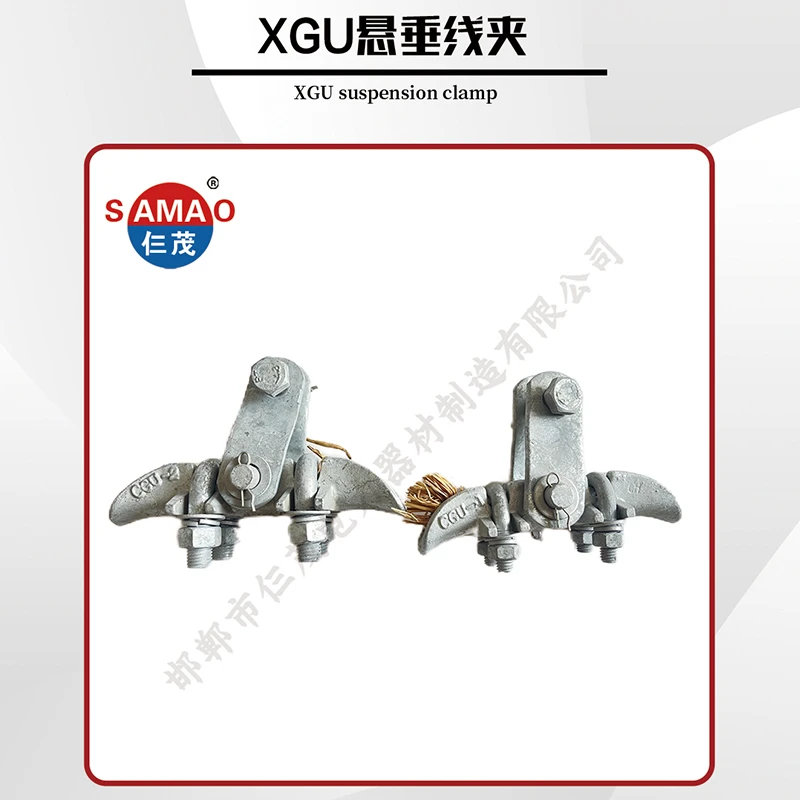
Cable Suspension Clamp serves as a core component in overhead power transmission and distribution systems, designed to securely suspend cables from insulator strings while withstanding various mechanical loads. This clamp plays a critical role in maintaining the stability of overhead lines, as it must bear the vertical installation load of cables within the span and prevent slipping or detachment from the insulator string during normal operation or in case of cable breakage. Unlike generic clamps, Cable Suspension Clamp is engineered with a structure that balances grip strength and cable protection—its inner surface often features anti-slip pads or a textured design to enhance friction, ensuring the cable remains fixed even under wind-induced sway or temperature-driven expansion and contraction. Additionally, when used with lightning protection wires, Cable Suspension Clamp can integrate with auxiliary components to support the lightning conductor, further enhancing the safety of the entire overhead line system.
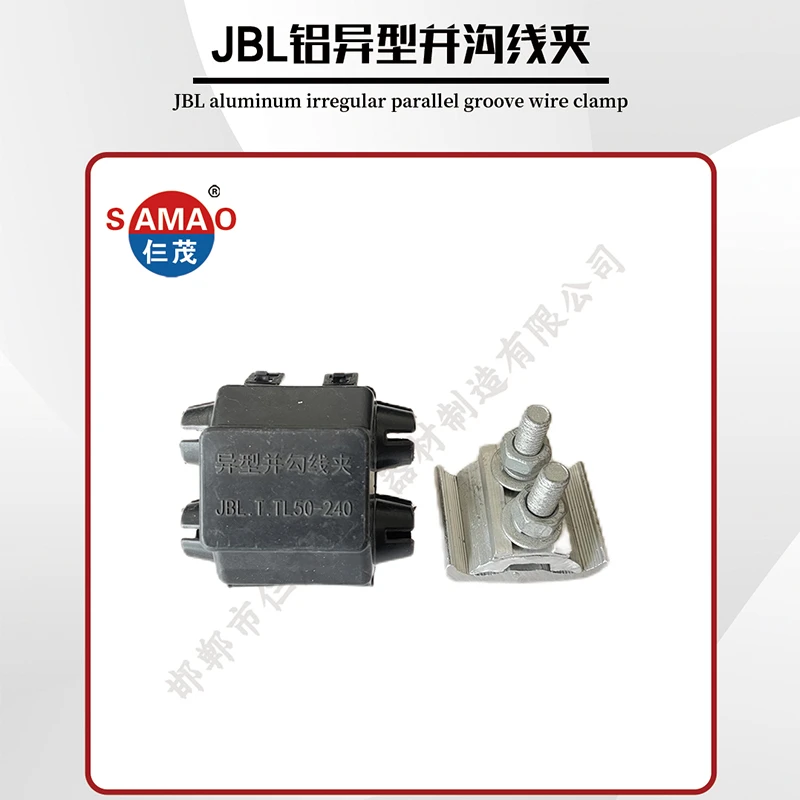
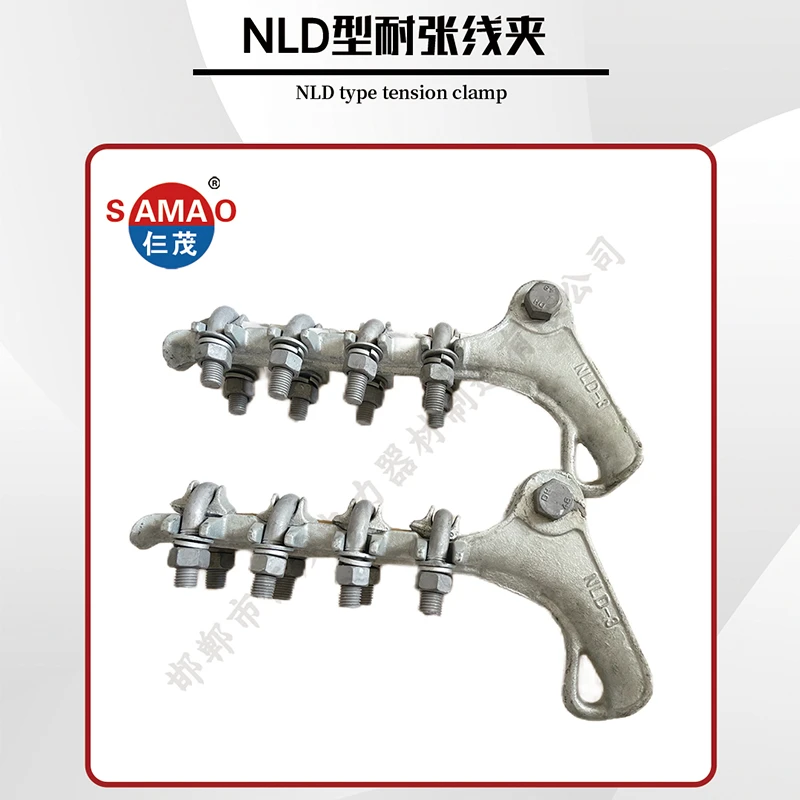
Overhead Line Clamp is a broad category that encompasses various specialized clamps, including Cable Suspension Clamp, and is tailored to meet the diverse needs of overhead line installations
This type of clamp is widely used in both high-voltage transmission lines and low-voltage distribution networks, with designs adapted to different cable sizes, conductor types, and environmental conditions. For instance, in areas with heavy ice accumulation, Overhead Line Clamp may feature a reinforced frame to resist the additional weight of ice, while in coastal regions, it may use corrosion-resistant materials like hot-dip galvanized steel or aluminum alloy to withstand salt spray. Overhead Line Clamp also facilitates easy installation and maintenance, as its modular design allows for quick attachment to poles or towers, reducing downtime during line construction or repairs. When paired with lightning protection wires, it ensures the auxiliary lines are securely positioned alongside the main cables, creating a comprehensive protective system against electrical surges.
Insulated Suspension Clamp is a specialized variant of Cable Suspension Clamp, designed with an insulating layer to prevent electrical leakage and enhance safety in overhead lines
This clamp is particularly suitable for lines where the cable needs to be isolated from the supporting structure, such as in medium-voltage distribution systems or areas with high humidity. The insulating material—typically high-strength polymer or composite resin—provides excellent electrical insulation properties while maintaining mechanical durability, allowing Insulated Suspension Clamp to bear the same vertical loads as traditional metal clamps without compromising safety. Its insulated design also eliminates the need for additional insulating components, simplifying the line structure and reducing installation costs. When used with lightning protection wires, Insulated Suspension Clamp can be combined with insulated fittings to ensure the lightning conductor does not interfere with the main cable’s electrical insulation, maintaining system reliability.
Aerial Cable Clamp is designed for the suspension and support of aerial cables, which are often used in urban distribution networks or areas where underground cabling is impractical
This clamp shares functional similarities with Cable Suspension Clamp but is optimized for the lighter weight and more flexible nature of aerial cables, such as those used for communication or low-voltage power transmission. Aerial Cable Clamp features a compact structure that minimizes wind resistance, reducing the risk of clamp damage during strong winds, and its clamping mechanism is adjustable to accommodate different cable diameters. In addition to suspending cables from poles or towers, Aerial Cable Clamp can also be used to secure cables at connection points or to support branch lines, ensuring consistent tension across the entire aerial network. When integrated with lightning protection systems, it provides a stable mounting point for lightning protection wires, ensuring they run parallel to the aerial cables and offer effective surge protection.
Top Beam Clamp is a specialized overhead line clamp used to mount cables or other line components to the top beams of towers, poles, or industrial structures, complementing the functionality of Cable Suspension Clamp in complex installations
This clamp is designed to attach directly to the beam’s surface, using bolts or a clamping mechanism to achieve a secure fit, and it can be adjusted to different beam widths for versatile application. Top Beam Clamp is often used in high-voltage transmission towers or industrial facilities where cables need to be suspended at elevated heights or along horizontal beams, and it is constructed from high-strength materials to withstand the combined weight of cables and environmental loads like wind or ice. When used with lightning protection wires, Top Beam Clamp provides a stable anchor point at the top of the structure, ensuring the lightning conductor is positioned to intercept surges before they reach the main cables, thereby enhancing the overall safety of the overhead line system.
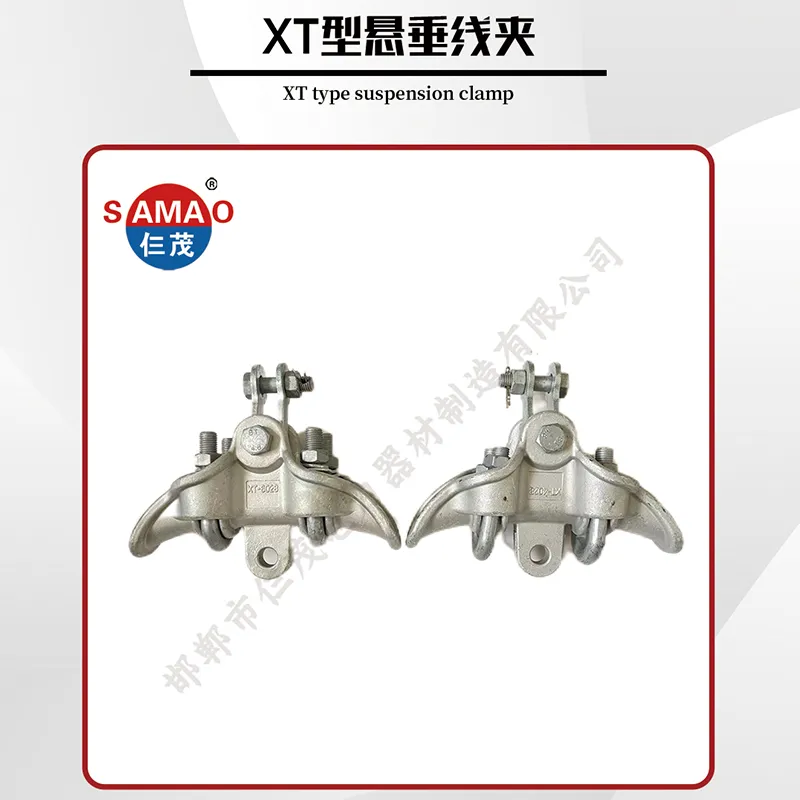
In summary, overhead line clamps—including Cable Suspension Clamp, Overhead Line Clamp, Insulated Suspension Clamp, Aerial Cable Clamp, and Top Beam Clamp—are indispensable components for ensuring the reliability, safety, and efficiency of overhead power and communication lines. Cable Suspension Clamp, as the core component, leads in secure cable suspension and load-bearing, while other clamps cater to specialized needs such as insulation, aerial cable support, or beam-mounted installation. All these clamps can be integrated with lightning protection wires to enhance system safety, and their durable designs ensure they withstand mechanical loads and environmental challenges during normal operation or unexpected events like cable breakage. Together, they form a comprehensive support system that keeps overhead lines stable, protected, and functional, underpinning the smooth operation of power transmission and distribution networks worldwide.
Cable Suspension Clamp FAQs
1. What are the primary functions and applications of a cable suspension clamp in overhead power lines?
A cable suspension clamp is designed to securely attach and support electrical conductors or overhead ground wires (such as lightning protection cables) to suspension insulator strings on utility poles or transmission towers. It is primarily used in straight-line sections of overhead power lines to handle vertical installation loads and ensure stability during normal operation or fault conditions like cable breakage. The clamp prevents sliding or disengagement from the insulator string, maintaining structural integrity and safety in electrical distribution systems.
2. How does the design of a cable suspension clamp enhance mechanical reliability and anti-drop performance?
The mechanical reliability of a cable suspension clamp is achieved through robust materials like forged iron or galvanized steel and a design that includes components such as a U-bolt,挂架 (hanger), and body. These elements work together to distribute stress evenly and avoid concentrated pressure on the cable. For instance, preformed spiral armor rods in some clamps protect cables from bending stress and vibration. Additionally, the clamp’s maximum deflection angle is engineered to accommodate cable movement under environmental loads (e.g., wind or ice) without exceeding safe limits, thereby preventing accidental drops.
3. What types of cables and installations are compatible with cable suspension clamp systems?
Cable suspension clamps are compatible with various cables, including aluminum conductors, steel-reinforced ground wires, ADSS (All-Dielectric Self-Supporting) optical fibers, and OPGW (Optical Ground Wire). They suit installations on wooden, concrete, or steel structures in straight spans,angle towers, or even for jumper wire fixation. The clamps can be used with traditional insulator strings or modern preformed tension sets, ensuring adaptability to different grid designs and cable diameters.
4. What are the key maintenance considerations and failure prevention strategies for cable suspension clamps?
Regular inspection is critical to identify wear, corrosion, or deformation in the clamp components, especially the hanging shaft and pivot points, which may develop grooves due to wind-induced friction. Maintenance should include checking for proper tightness of bolts, ensuring the cable is firmly pressed without slippage, and verifying that aluminum packing strips are correctly wrapped to avoid abrasion. For lightning-prone areas, integrating防雷悬式绝缘子 (lightning protection suspension insulators) with the clamp system can divert surge currents and prevent arc damage, enhancing longevity.
5. How do environmental factors influence the selection and performance of cable suspension clamps?
Environmental factors such as wind intensity, ice loading, temperature fluctuations, and corrosive conditions (e.g., coastal salt exposure) dictate the choice of cable suspension clamp. In high-wind regions, clamps with reinforced holding capacity and anti-galloping features are essential to minimize oscillation and fatigue. For corrosive environments, stainless steel or hot-dip galvanized materials provide durability. Additionally, in areas with frequent lightning, combining the clamp with insulating components that have arc-resistant properties (e.g., air gap electrodes) ensures continuous operation without failure.
-
Laundry Efficiency Guide with pengapit ampaian dengan cangkuk iNewsApr.16,2026
-
Optimizing Power Infrastructure with the pengapit ampaian tnbNewsApr.09,2026
-
Comprehensive Guide to Selecting the Right pengapit penggantungan untuk kabel lt ab SolutionsNewsApr.07,2026
-
Comprehensive Guide to Pengapit Talian Penghantaran for Secure Package DeliveryNewsApr.04,2026
-
Comprehensive Guide to Pemasangan Pengapit Penggantungan for Overhead Cabling SystemsNewsMar.31,2026
-
Comprehensive Guide to Pengapit Ampaian yang Telah Dibentuk for Construction SafetyNewsMar.28,2026
-
Comprehensive Guide to Pengapit Ampaian Besi for Scaffolding SafetyNewsMar.26,2026