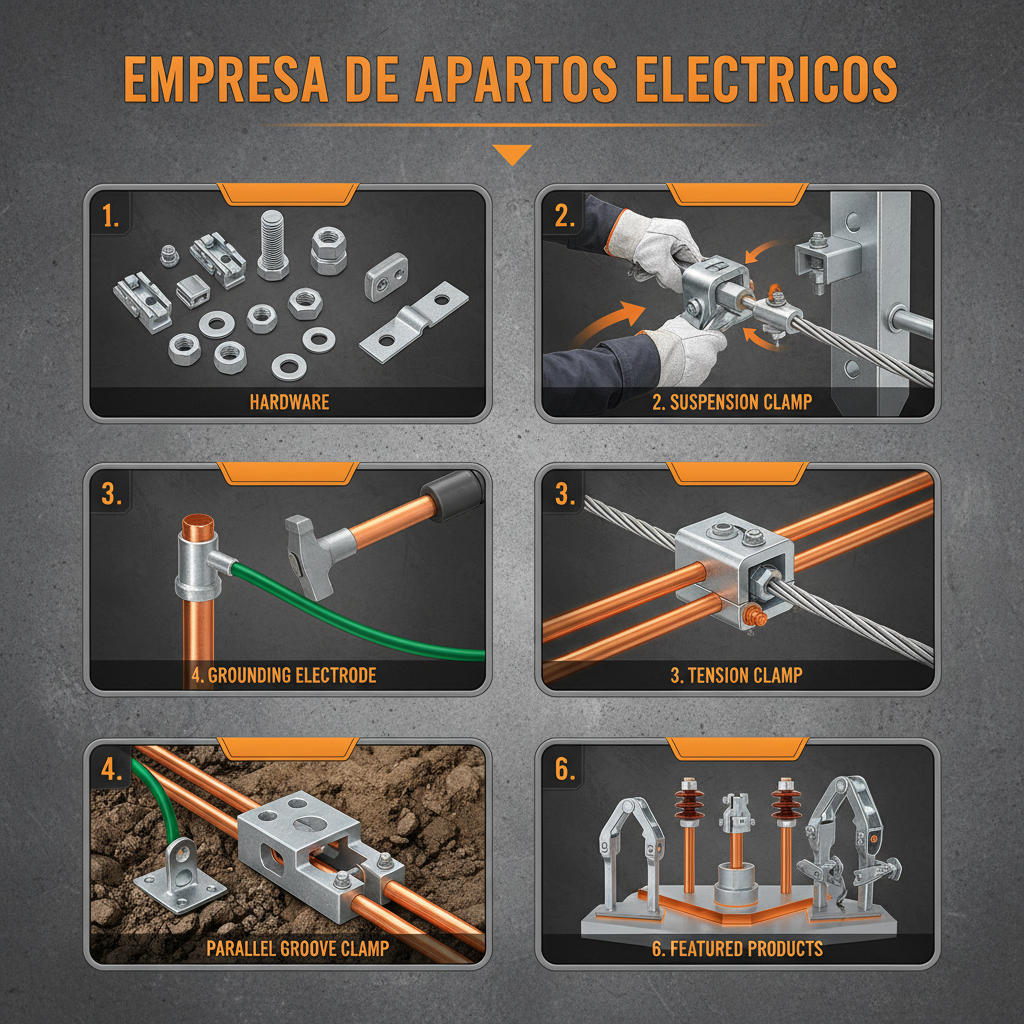
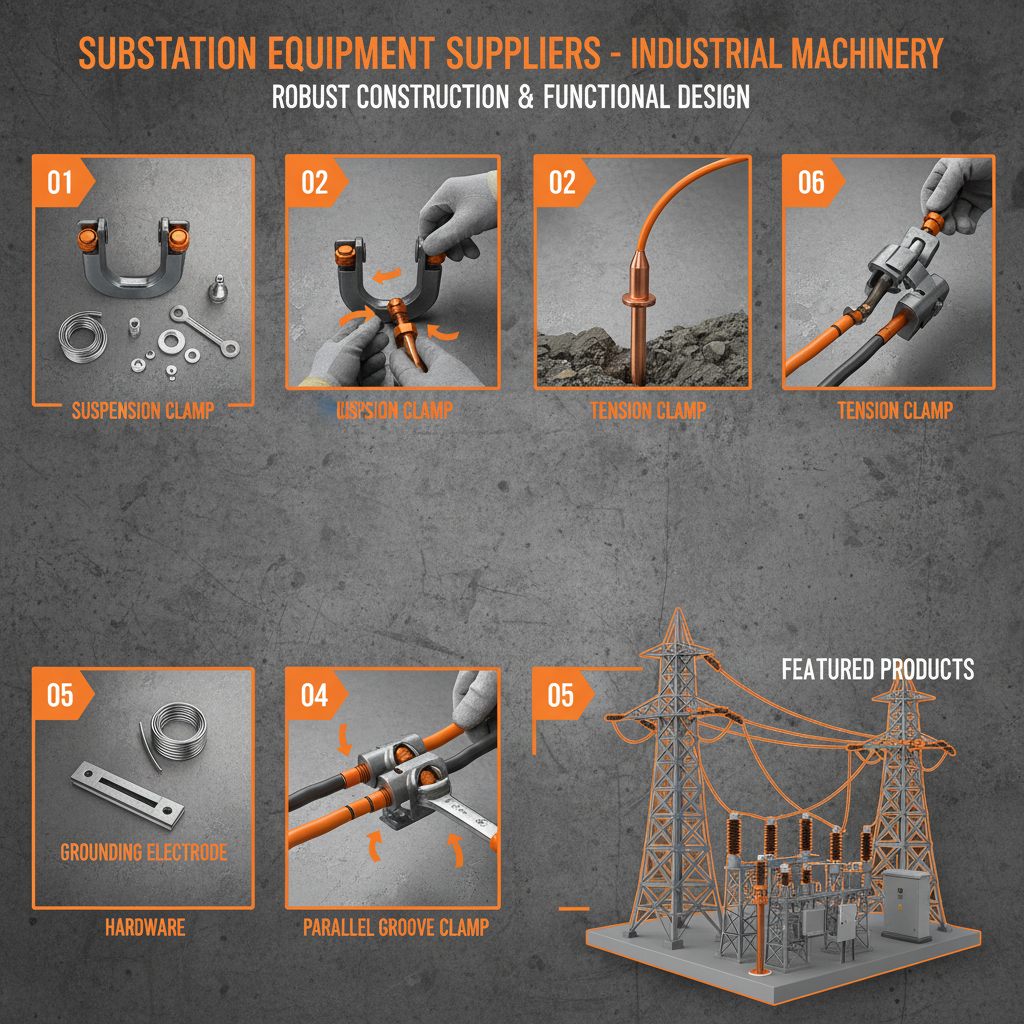
The stability of high-voltage transmission networks depends heavily on the mechanical integrity of line hardware. In the current landscape of power grid expansion, the role of suspension clamp suppliers has evolved from providing simple fasteners to delivering precision-engineered components that can withstand extreme environmental stress and conductor vibration.
Engineering challenges such as aeolian vibration and galloping conductors require hardware that balances clamping force with material flexibility. If the clamp is too tight, it may cause stress corrosion cracking in the conductor; if too loose, it risks slippage and catastrophic line failure. This delicate balance is the primary focus for modern utility procurement and technical specification.
This technical analysis examines the critical selection criteria for line hardware, the distinction between tension and suspension mechanisms, and how to evaluate the manufacturing capabilities of global suspension clamp suppliers to ensure long-term grid reliability.


The fundamental purpose of line clamping hardware is to secure the conductor to the insulator string while managing the mechanical load. Suspension clamps are designed to support the weight of the conductor in vertical or near-vertical orientations, allowing the wire to "hang" without bearing the primary longitudinal tension of the span.
In contrast, tension hardware must withstand the full tensile force of the conductor. The mechanical interface must prevent slippage through controlled compression, ensuring that the friction between the clamp material and the conductor surface is sufficient to maintain the line's designed sag and tension.
Clamping force is the most critical parameter in hardware selection. For tension clamps, the clamping force should typically not be less than 90% of the rated tensile force of the installed conductor or lightning protection wire. This ensures that the clamp does not slip even under maximum wind or ice loading conditions.
For specialized applications like ADSS optical cables, the requirements are even more stringent, with grip strength often needing to reach at least 95% of the rated tensile strength. This is necessary because optical fibers are more sensitive to concentrated stress and deformation than aluminum conductors.
Selecting the wrong clamp type can lead to "conductor bird-caging" or fatigue failure. Engineering teams must verify the interaction between the clamp's internal radius and the conductor diameter to avoid creating a stress concentration point that could lead to premature wire breakage.
While both categories fall under the scope of many suspension clamp suppliers, their operational logic differs fundamentally. Suspension clamps act as support points, whereas tension clamps act as anchors.
This distinction is vital during the design phase of non-linear towers. For example, at a corner tower, a dead-end tension clamp is required to anchor the line, while on a straight tangent tower, a suspension clamp is used to simply carry the wire's weight.
Material selection directly impacts the lifespan of the power fitting. Most professional suppliers utilize high-strength aluminum alloys or galvanized steel to prevent oxidation and atmospheric corrosion.
For optical cable applications, the use of spiral aluminum-clad steel wire is common due to its extreme tensile strength and ability to distribute stress evenly, which reduces vibration and protects the fragile glass core of the cable.
In representative engineering scenarios, tension clamps are deployed at terminal points of a line or at splice connections where the conductor must be securely anchored to a tower. These are essential for maintaining the structural geometry of the power line, especially in rugged terrain where wind loads are unpredictable.
Conversely, suspension clamps are used on tangent towers along straight sections of the line. These fittings allow the conductor to move slightly, accommodating thermal expansion and contraction of the wire without inducing excessive mechanical stress on the tower itself.
The industry is shifting toward automated CNC production lines to reduce human error in the casting and machining of hardware. As grid requirements become more precise, the tolerance for fitting dimensions is narrowing, necessitating advanced online testing systems and full-process computer control.
Sustainable development is also influencing the sector. Manufacturers are increasingly focusing on low-carbon, environmentally friendly surface treatments to replace traditional chemical processes, ensuring that power fittings are both corrosion-resistant and ecologically sustainable.
Furthermore, the integration of smart monitoring sensors into line hardware is an emerging R&D direction. Future clamps may be capable of reporting real-time tension data or vibration levels, allowing utility companies to move from scheduled maintenance to predictive maintenance.
When vetting suspension clamp suppliers, procurement officers should evaluate the synergy between production capacity and quality control systems. A supplier with an ISO9001/ISO14001 certified system and a comprehensive physical testing facility is more likely to provide consistent hardware performance.
Technical depth is also a key differentiator. Suppliers that can provide detailed clamping force data and material certifications for various conductor types demonstrate a higher level of expertise than those offering generic products.
The following matrix provides a baseline for comparing different hardware configurations based on their engineering application and expected performance.
| Configuration Profile | Mechanical Focus | Load Handling | Recommended Use Case |
|---|---|---|---|
| Basic Suspension | Vertical Support | Low-Medium | Tangent Tower Spans |
| Heavy-Duty Tension | Longitudinal Grip | High | Dead-end Anchor Points |
| Precision Optical | Stress Distribution | Medium | ADSS Cable Lines |
| Corrosion-Resistant | Surface Integrity | Medium | Coastal/Industrial Areas |
| Vibration-Damping | Dynamic Stability | Medium | High-Wind Corridors |
| Combined Hybrid | Multi-axis Load | High | Complex Junction Towers |
A suspension clamp is designed to support the conductor's weight vertically on a tower, allowing the wire to hang without bearing the main span tension. A tension clamp (or strain clamp) is designed to withstand the full longitudinal tensile force of the conductor, typically used at the ends of a line or at corners to anchor the cable firmly to the tower structure.
Clamping force is verified through pull-out tests where the clamp is subjected to increasing tensile loads until slippage occurs. In professional manufacturing, the clamping force should be at least 90% to 95% of the rated tensile strength of the conductor to ensure safety and prevent failure during extreme weather events.
Aluminum alloys and hot-dip galvanized steel are the industry standards. For highly corrosive coastal or industrial environments, high-grade stainless steel or specialized polymer coatings are recommended to prevent oxidation and ensure the structural integrity of the line hardware over several decades.
Generally, no. Type 2 tension clamps serve as electrical conductors and are designed to be permanent fixtures once installed. Due to the high compression forces applied during installation, attempting to disassemble them often damages the clamp structure or the conductor itself, compromising the safety of the connection.
Evaluate the supplier based on three key pillars: Manufacturing Capability (CNC equipment and surface treatment plants), Quality Certification (ISO 9001/14001), and Technical Support (ability to provide precise load-bearing data and customized fittings). A supplier with a history of winning bids from major power grids usually indicates a higher reliability standard.
ADSS cables contain glass fibers that cannot withstand concentrated stress. If a clamp applies too much localized pressure, it can cause micro-bends or breaks in the fiber. Therefore, specialized fittings with a grip strength of 95%+ and an even stress distribution mechanism are required to maintain signal integrity.
The reliability of a power transmission network is only as strong as its weakest fitting. By understanding the mechanical divergence between suspension and tension clamping and prioritizing high-precision manufacturing, utility operators can significantly reduce the risk of line failure.
Ultimately, the selection of suspension clamp suppliers should be based on a rigorous assessment of material science, clamping force verification, and the supplier's ability to adapt to the evolving requirements of modern, sustainable power grids. For more technical specifications on power fittings, visit www.samaoep.com.