Selecting a reliable connection point for overhead power lines is not merely a matter of choosing a part; it is a critical decision regarding the stability of the entire energy grid. When engineers search for a parallel groove clamp factory, they are looking for a partner capable of delivering mechanical precision and material durability that can withstand decades of environmental stress.
The industry is currently shifting toward higher transmission efficiencies and more resilient infrastructure. This transition requires hardware that can balance strong grip force with minimal conductor damage, ensuring that the electrical path remains unobstructed while the physical connection stays secure under extreme wind loads or thermal expansion.
This analysis examines the technical requirements for high-performance power fittings, the logic behind conductor clamping, and how professional manufacturing standards impact the long-term viability of power distribution networks.


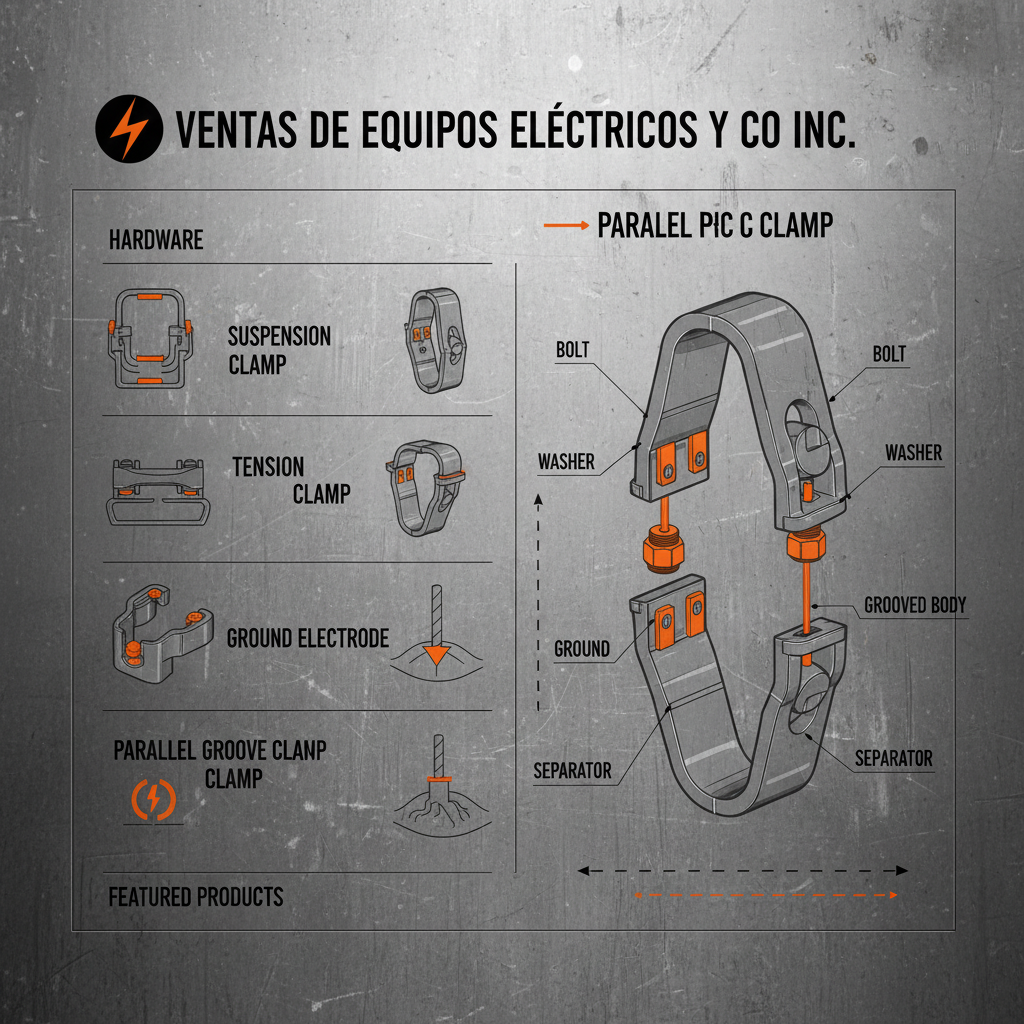
At the core of power distribution is the need to join conductors without increasing electrical resistance or inducing mechanical stress. The parallel groove clamp serves as a critical junction, utilizing a bolted mechanism to compress two or more conductors in a parallel orientation, creating a high-pressure contact area that ensures current flow remains stable.
This process is not merely about tightening a bolt; it involves the precise geometry of the grooves to ensure the conductors do not slip under longitudinal tension. A professional parallel groove clamp factory focuses on the alignment of these grooves to distribute pressure evenly, preventing the "pinching" effect that can lead to conductor failure.
The efficacy of a clamp depends on the relationship between the material hardness of the fitting and the malleability of the conductor. If the clamp is too soft, it will deform under tension; if it is too hard without proper surface treatment, it may gouge the aluminum or copper strands of the wire, creating a weak point susceptible to fatigue.
Modern engineering utilizes high-strength alloys and specialized galvanization to resolve this conflict. For instance, the use of CNC production lines allows for tighter tolerances in the casting and machining process, ensuring that the fit between the clamp and the wire is seamless across different diameters of bare aluminum or copper cables.
Furthermore, the integration of load balancing is essential. High-quality clamps are designed to distribute the tension across the entire contact surface rather than concentrating it on a single point, which is vital for maintaining the structural integrity of the overhead line during extreme weather events.
Power fittings are exposed to the most aggressive environments, from salt-laden coastal air to industrial pollutants and extreme humidity. Corrosion is not just an aesthetic issue; it is a functional failure that increases contact resistance and reduces the mechanical grip of the clamp.
The long-term stability of a power grid is directly proportional to the chemical stability of its hardware. Hot-dip galvanizing and the use of corrosion-resistant stainless steel are the primary defenses against oxidative failure in high-altitude and high-humidity installations.
When evaluating the output of a manufacturer, the thickness and uniformity of the protective coating are the most reliable indicators of service life. Fittings that pass ISO9001 and ISO14001 standards typically exhibit superior weather resistance, preventing rust and corrosion from compromising the electrical connection over several decades of deployment.
Assessing the quality of power fittings requires a multi-dimensional approach. Engineers typically look at grip strength, electrical conductivity, installation speed, and environmental durability. A high-performance clamp must provide a grip force that exceeds the rated tensile strength of the cable by a safe margin to prevent slippage during wind-induced oscillations.
The following index provides a relative assessment of how different hardware attributes contribute to the overall reliability of a power distribution installation. This conceptual model emphasizes that while mechanical strength is the foundation, environmental resistance is what determines the actual lifespan of the asset.
In a typical industrial setting, such as the installation of ADSS or OPGW cables, the requirements for clamping are specialized. For optical cables, the fitting must provide secure suspension without inducing concentrated stress or bending fatigue. Pre-stranded hang wire clips are often employed here, utilizing spiral inner and outer layers to protect the cable and reduce auxiliary vibration.
Conversely, in high-voltage transmission lines, the focus shifts to tensile strength and load balancing. Suspension clamps must be capable of supporting the weight of the wire while accommodating the deflection angle of the tower. If the angle exceeds the safe operating limit, engineers must implement corrective measures, such as adjusting tower height or deploying double wire clips to prevent mechanical failure.
The industry has moved away from simple cast-iron fittings toward highly engineered components produced through CNC machining and automated surface treatment. This evolution is driven by the need for "smart grids" that can handle higher loads with lower maintenance requirements.
One major trend is the increase in adaptability. Modern clamps are designed to be compatible with a wider range of wire types, including aluminum alloys and copper-clad steel, allowing utilities to standardize their inventory while maintaining high performance across different line specifications.
Sustainability has also entered the manufacturing process. Leading factories are integrating low-carbon, green production methods, reducing chemical waste during the galvanization process, and focusing on materials that offer a longer lifecycle to reduce the frequency of replacement cycles.
Choosing the right hardware requires a trade-off analysis between installation speed, initial cost, and long-term reliability. A cheap clamp that requires frequent re-tightening is more expensive over its lifecycle than a precision-engineered part that remains stable for twenty years.
Decision-makers should evaluate the environment first—high salt, high heat, or high wind—and then match the material specification to that environment. For instance, galvanized steel is excellent for general use, but stainless steel or specialized alloys are necessary for extreme corrosive zones.
The following framework outlines the critical considerations when selecting fittings for different transmission scenarios, emphasizing the relationship between the application and the required technical specification.
| Application Scenario | Primary Requirement | Recommended Material | Critical Risk Factor |
|---|---|---|---|
| Urban Distribution | Installation Speed | Galvanized Steel | Vandalism/Weathering |
| Coastal Power Lines | Corrosion Resistance | Stainless Steel/Alloy | Salt Spray Oxidation |
| High-Altitude Towers | Tensile Strength | High-Strength Alloy | Wind-Induced Fatigue |
| Optical Cable (ADSS) | Stress Distribution | Composite/Polymer | Bending Stress |
| Industrial Zones | Chemical Resistance | Specialized Coating | Acidic Pollutants |
| Rural Long-Span | Load Balancing | Hot-Dip Galvanized | Sag/Thermal Expansion |
A parallel groove clamp is used to create a secure electrical and mechanical connection between two or more conductors running in a parallel direction. By utilizing a bolted compression mechanism, it ensures low contact resistance and prevents the conductors from slipping under the tension of the overhead line, which is essential for maintaining grid stability and preventing power outages.
Material choice determines the fitting's ability to resist environmental degradation. For example, hot-dip galvanized steel provides a robust barrier against moisture and oxidation in standard environments. In contrast, stainless steel or specialized alloys are required for coastal or industrial areas where salt and chemical pollutants would rapidly corrode standard steel, leading to mechanical failure and increased electrical resistance.
Insufficient grip force can lead to conductor slippage, causing the line to sag or detach from the support structure, especially during high wind events. Conversely, excessive force applied through improper tools can crush or gouge the conductor strands, creating localized stress points that make the wire susceptible to fatigue and eventual breakage under normal operating loads.
While both are power fittings, they serve different purposes. Parallel groove clamps are primarily for joining conductors together (branching or tapping). Suspension clamps are designed to support the weight of the conductor and fix it to a tower or pole, focusing on vertical load-bearing and vibration damping rather than electrical joining.
The deflection angle is the maximum angle at which a cable can turn relative to the suspension point. If the actual angle of the line exceeds the clamp's maximum deflection limit, the U-shaped screws may become blocked or the cable may apply uneven pressure on the hull. This can lead to structural failure, necessitating the use of double wire clips or tower height adjustments.
Prioritize CNC-manufactured fittings when the project involves high-precision requirements, such as varying conductor diameters or high-tension environments. CNC production ensures tighter tolerances and more consistent material density, which results in more predictable grip force and better load balancing, significantly reducing the risk of failure in critical infrastructure projects.
The reliability of a power grid is only as strong as its smallest connection. Investing in high-precision hardware from a verified parallel groove clamp factory is not just an operational choice, but a risk management strategy. By focusing on material science, corrosion resistance, and mechanical precision, utilities can ensure that their infrastructure remains resilient against both the elements and the demands of increasing energy loads.
As the industry moves toward more sustainable and automated distribution systems, the integration of standardized, high-performance fittings will be key to reducing maintenance costs and increasing the overall lifespan of global electrical networks.