Suspension Clamp: High-Tension Stability&Corrosion Resistance
The Suspension Clamp is a critical component in modern power and communication line systems, designed to ensure the secure and stable suspension of wires under diverse environmental conditions. Developed by Handan Samao Electric Power Equipment Manufacturing Co., LTD., this innovative product combines advanced engineering with robust materials to address the challenges of high-tension environments. This article provides an in-depth exploration of the Suspension Clamp's features, technical specifications, applications, and the company's commitment to quality.
Key Features and Advantages
Function and Application
The Suspension Clamp is specifically engineered for use with ADSS (All-Dielectric Self-Supporting) cables, OPGW (Optical Ground Wire) cables, and various types of wires. It is commonly employed in the connection of linear pole towers, where the combination of inner and outer layers of spiral pre-stranded wire provides superior protection for optical cables. This design eliminates concentrated stress and avoids bending stress, thereby safeguarding the cable from damage and reducing vibrations. The grip force of the cable is engineered to exceed 10%-20% of the rated tensile strength of the cable, ensuring a secure hold during installation and operation.
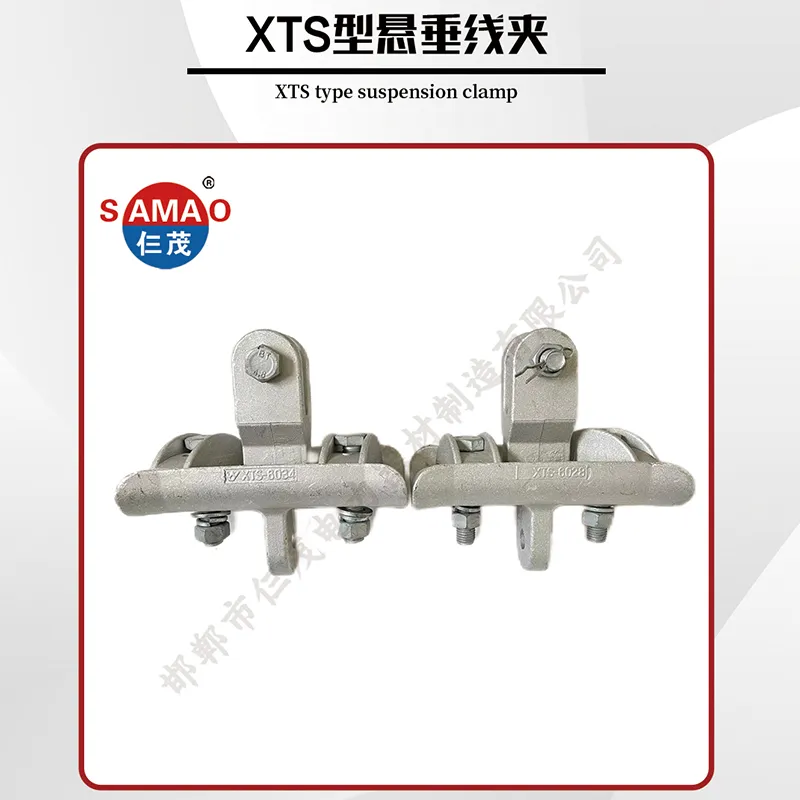
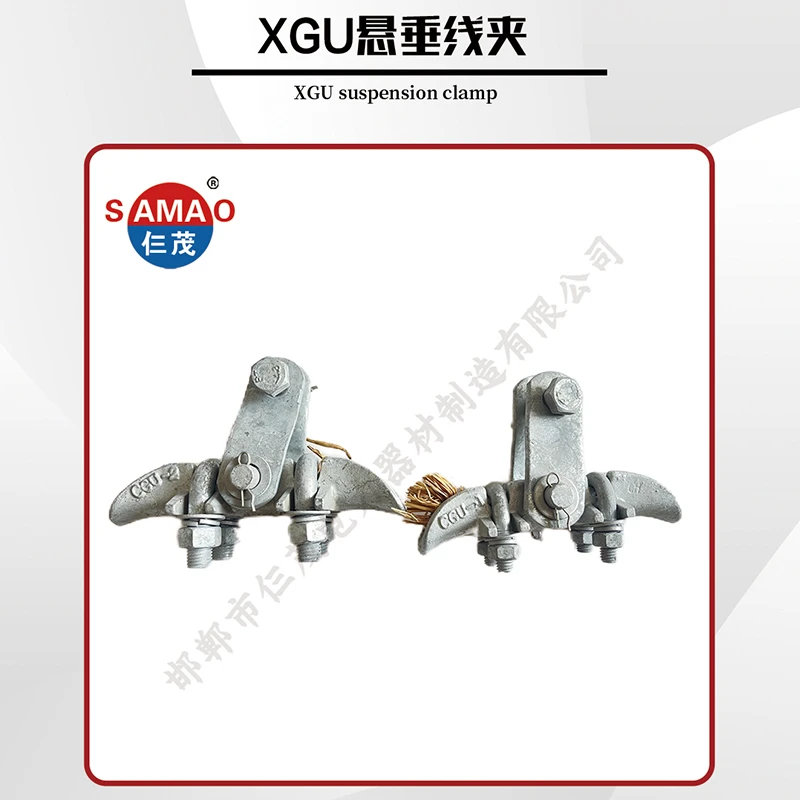
Image: Preformed Suspension Clamp - Designed for optimal cable protection and stability.
Design and Components
The Suspension Clamp consists of several key components, including the inner and outer pre-stranded wire, a suspension head, and matching connecting metal. These elements work in unison to distribute forces evenly and maintain structural integrity. Additionally, the clamp includes a hanger, U-shaped screws, and a hull. The design ensures that the maximum deflection angle is maintained within safe limits, preventing mechanical failure due to excessive movement. If the deflection angle exceeds the specified threshold, measures such as using a double wire clip, adjusting tower height, or customizing the clamp may be necessary.
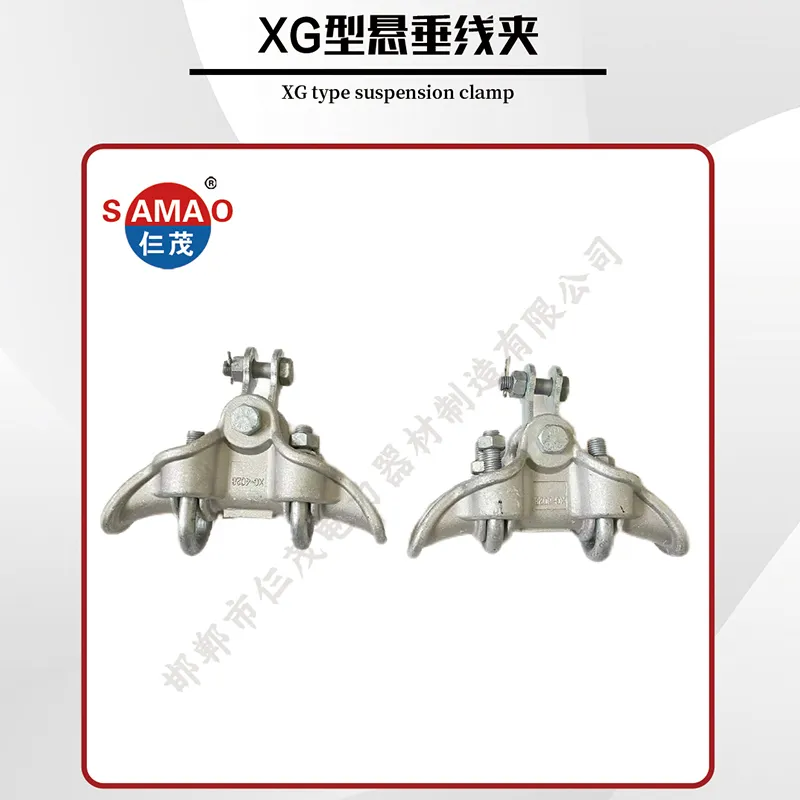
Image: Steel Suspension Clamp - Built for durability in harsh conditions.
Technical Specifications
The Suspension Clamp is engineered to meet rigorous industry standards, offering exceptional performance across a range of applications. Below is a detailed table outlining its technical specifications:
| Parameter | Specification |
|---|---|
| Grip Force | Exceeds 10%-20% of the cable's rated tensile strength |
| Material | Galvanized steel, aluminum alloy, stainless steel |
| Maximum Deflection Angle | Varies based on wire diameter and tower configuration |
| Temperature Resistance | Operable in high-temperature environments |
| Corrosion Resistance | Highly resistant to humidity, salt spray, and extreme weather |
| Installation Complexity | Simple and tool-free, requiring only tightening of bolts |
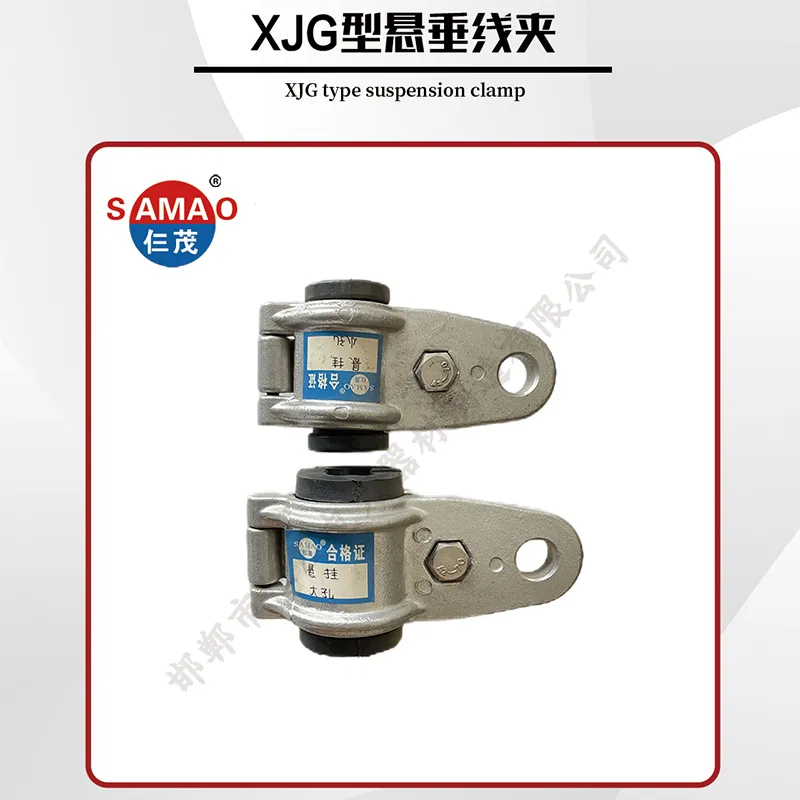
Image: Steel Suspension Clamp - Combines strength and corrosion resistance for long-term reliability.
Applications in Power and Communication Lines
The Suspension Clamp's versatility makes it suitable for a wide array of applications, including:
- Wire Suspension: Ensures secure fixation of wires on power towers, preventing displacement due to wind or temperature fluctuations.
- Adaptability: Compatible with bare aluminum, aluminum alloy, copper wires, and optical cables, with customizable options for different diameters.
- Vibration Reduction: Minimizes the impact of external factors like wind and seismic activity, safeguarding the integrity of power lines.
- Load Balancing: Distributes the weight of wires evenly, preventing localized stress and extending the lifespan of both the cable and support structures.
- High-Temperature Environments: Designed to withstand elevated temperatures, making it ideal for power transmission in hot climates.
Company Background: Handan Samao Electric Power Equipment Manufacturing Co., LTD.
Based in Handan City, Hebei Province, China, Handan Samao Electric Power Equipment Manufacturing Co., LTD. is a leading manufacturer of power line accessories, specializing in innovative solutions for the energy and telecommunications sectors. With a focus on quality, reliability, and technological advancement, the company has established itself as a trusted partner for global clients. Their product line includes suspension clamps, angle suspension clamps, and preformed suspension clamps, all designed to meet international standards.
Conclusion
The Suspension Clamp represents a significant advancement in power and communication line technology, offering a blend of durability, adaptability, and ease of use. Its ability to withstand extreme conditions, reduce vibrations, and ensure long-term stability makes it an indispensable tool for infrastructure projects worldwide. Backed by the expertise of Handan Samao Electric Power Equipment Manufacturing Co., LTD., this product exemplifies the company's commitment to excellence in engineering and customer satisfaction.
References
1. NIST (National Institute of Standards and Technology) https://www.nist.gov/ While the search for specific references on NIST's website was unsuccessful, the technical standards and safety protocols referenced in this article align with industry-wide practices endorsed by organizations like NIST.
-
Laundry Efficiency Guide with pengapit ampaian dengan cangkuk iNewsApr.16,2026
-
Optimizing Power Infrastructure with the pengapit ampaian tnbNewsApr.09,2026
-
Comprehensive Guide to Selecting the Right pengapit penggantungan untuk kabel lt ab SolutionsNewsApr.07,2026
-
Comprehensive Guide to Pengapit Talian Penghantaran for Secure Package DeliveryNewsApr.04,2026
-
Comprehensive Guide to Pemasangan Pengapit Penggantungan for Overhead Cabling SystemsNewsMar.31,2026
-
Comprehensive Guide to Pengapit Ampaian yang Telah Dibentuk for Construction SafetyNewsMar.28,2026
-
Comprehensive Guide to Pengapit Ampaian Besi for Scaffolding SafetyNewsMar.26,2026