Ensuring the stability of electrical infrastructure requires a deep understanding of how energy is managed and safely dissipated. For any empresa de fornecimento de energia, the integration of high-quality grounding systems is not merely a technical requirement but a fundamental safety imperative to protect both personnel and equipment.
The complexity of modern power grids means that grounding engineering must be tailored to specific geological conditions. A professional empresa de fornecimento de energia recognizes that soil resistivity and moisture content are critical variables that dictate the effectiveness of lightning protection and surge dissipation.
Ultimately, the goal of a reliable empresa de fornecimento de energia is to establish a seamless electrical connection with the earth. By utilizing advanced grounding electrodes and conductors, they can safely disperse lightning energy and reduce the risk of electric shock, ensuring a qualified lightning protection process.
The Fundamentals of Grounding for an Empresa de Fornecimento de Energia
Grounding engineering is the backbone of any stable power distribution network. For an empresa de fornecimento de energia, a grounding electrode serves as the primary metal conductor or group of conductors that maintain direct contact with the soil. This connection is essential for creating a low-impedance path for fault currents.
Without a properly designed grounding body, the risk of equipment failure increases exponentially. The primary function is to safely disperse lightning energy and release it into the earth, ensuring that the entire network remains operational even during severe weather events.
Environmental Factors Impacting Energy Supply Infrastructure
The effectiveness of grounding is heavily dependent on the surrounding environment. An empresa de fornecimento de energia must conduct thorough site surveys because factors like soil resistivity and soil structure can drastically alter the engineering outcome.
Moisture content and the available construction area also play pivotal roles in determining the shape and size of the grounding grid. Designing a system without considering these specific project location variables is practically unfeasible and could lead to catastrophic failures.
Therefore, accurate design based on geological conditions—specifically the distribution of soil layers—is the only way a professional empresa de fornecimento de energia can guarantee a qualified lightning protection process.
Artificial vs Natural Grounding Electrodes
In the operational framework of an empresa de fornecimento de energia, grounding electrodes are categorized into two main types: artificial and natural. Natural electrodes utilize existing metallic structures already in contact with the earth.
Artificial grounding electrodes are specifically engineered conductors installed by an empresa de fornecimento de energia to achieve a target resistance. These are essential when natural options are insufficient or soil resistivity is too high.
The choice between these two depends on the geological analysis of the site. A seasoned empresa de fornecimento de energia will often combine both to ensure maximum safety and redundancy in the lightning protection system.
Technical Performance Metrics in Grounding Engineering
Evaluating the success of a grounding installation requires precise metrics. For an empresa de fornecimento de energia, the primary KPI is the grounding resistance, which must be kept low enough to facilitate the rapid discharge of currents.
This involves analyzing the relationship between conductor material and soil conductivity. By optimizing the grounding grid's geometry, an empresa de fornecimento de energia can ensure that electrostatic induction and electromagnetic induction are neutralized.
Grounding Efficiency Ratings by Methodology
The Critical Role of Lightning Protection Systems
Lightning protection is the most vital link in electrical engineering. Every empresa de fornecimento de energia knows that regardless of the protection technology used—be it direct protection or wave invasion mitigation—the ultimate goal is to channel lightning current safely into the ground.
Without superior grounding technology, a lightning protection process cannot be considered qualified. An empresa de fornecimento de energia must therefore prioritize the quality of the grounding body to prevent catastrophic surge damage to the grid.
Safety Protocols and Protective Grounding Functions
Protective grounding serves a distinct purpose compared to lightning protection. For an empresa de fornecimento de energia, it is about establishing a secure metal connection between non-electrified metal parts and the grounding electrode.
This critical connection reduces the ground voltage at the point of contact. When an empresa de fornecimento de energia implements this correctly, it effectively eliminates the risk of electric shock to human operators.
By focusing on these protective grounding functions, the empresa de fornecimento de energia ensures that maintenance personnel can work safely around high-voltage equipment without fear of accidental electrification.
Strategic Material Selection for Power Distribution
Material selection is a strategic decision for any empresa de fornecimento de energia. Based on the soil's chemical composition and moisture, materials must be chosen to resist corrosion while maintaining high conductivity.
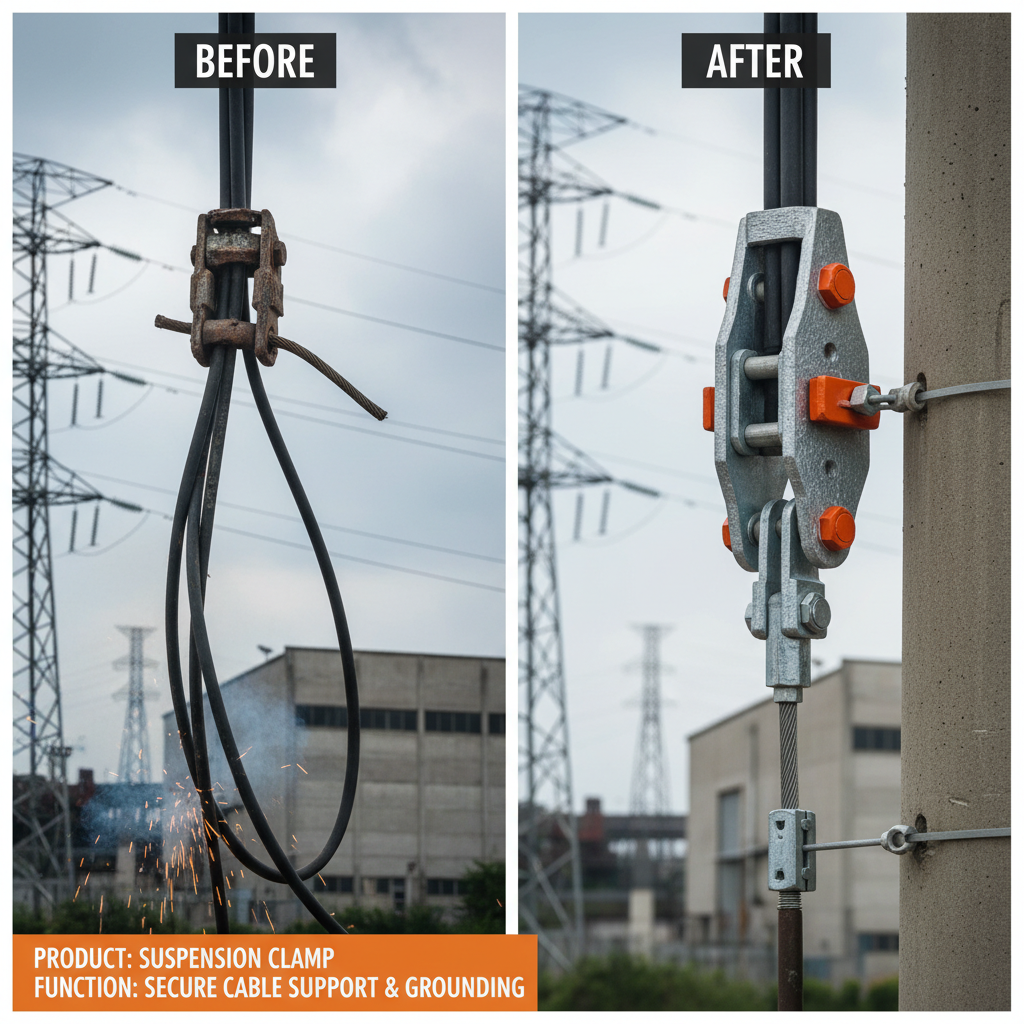
From grounding electrodes to parallel groove clamps and suspension clamps, every component must work in harmony. An empresa de fornecimento de energia prioritizes materials that can withstand the harsh subterranean environment.
The synergy between the grounding electrode and other hardware, such as tension clamps, ensures the long-term structural integrity of the distribution network, which is a key priority for every empresa de fornecimento de energia.
Core Material and Design Analysis for Power Infrastructure
|
Component Type
|
Primary Function
|
Environmental Priority
|
Empresa de Fornecimento Rating
|
| Grounding Electrode |
Current Dissipation |
Soil Resistivity |
10/10 |
| Parallel Groove Clamp |
Conductor Connection |
Oxidation Resistance |
8/10 |
| Suspension Clamp |
Line Support |
Mechanical Stress |
9/10 |
| Tension Clamp |
End Termination |
Tensile Strength |
9/10 |
| Grounding Grid |
Equipotential Bonding |
Surface Area |
10/10 |
| Protective Bonding |
Shock Prevention |
Contact Integrity |
8/10 |
FAQS
Soil resistivity determines how easily electrical current can flow into the earth. For an empresa de fornecimento de energia, knowing this value is crucial because high-resistivity soil (like rock or sand) requires more extensive artificial grounding electrodes or chemical treatments to achieve the safety standards necessary for lightning protection.
Natural electrodes are pre-existing metallic structures in the soil, whereas artificial electrodes are specifically installed conductors. An empresa de fornecimento de energia uses artificial electrodes when natural ones cannot provide the required low-resistance path to ground, ensuring a qualified lightning protection process.
Protective grounding establishes a metal connection between non-electrified parts and the grounding electrode. This reduces the ground voltage of the contact point, so if a fault occurs, the current is channeled to the earth rather than through a human body, a standard safety practice for any empresa de fornecimento de energia.
No, natural grounding should be evaluated and used whenever possible to increase redundancy. However, relying solely on it is risky. A professional empresa de fornecimento de energia integrates both natural and artificial systems to guarantee the most reliable dispersal of lightning energy.
The ultimate goal is to safely send lightning current into the ground. For an empresa de fornecimento de energia, this involves a comprehensive process including electrostatic and electromagnetic induction protection, all of which depend entirely on the quality of the grounding technology.
Inspection frequency varies by environment, but a diligent empresa de fornecimento de energia typically conducts annual resistivity tests. This ensures that corrosion or soil changes haven't compromised the grounding electrode's ability to safely disperse energy.
Conclusion
The stability of any electrical grid depends on the precision of its grounding engineering. From the careful analysis of soil resistivity to the strategic deployment of grounding electrodes, every step taken by an empresa de fornecimento de energia is vital for the safety of the infrastructure and the public. By integrating both artificial and natural grounding solutions, energy providers can effectively mitigate the risks of lightning strikes and electric shocks.
Looking forward, the evolution of materials and digital monitoring will allow an empresa de fornecimento de energia to maintain grounding systems with unprecedented accuracy. Investing in high-quality grounding components today is the only way to ensure a resilient, sustainable, and safe energy future. Visit our website for professional solutions: www.samaoep.com