Chem Rod Grounding Electrode: Safer, Low-Ohm, Long-Life?
A field-tested take on the chem rod grounding electrode
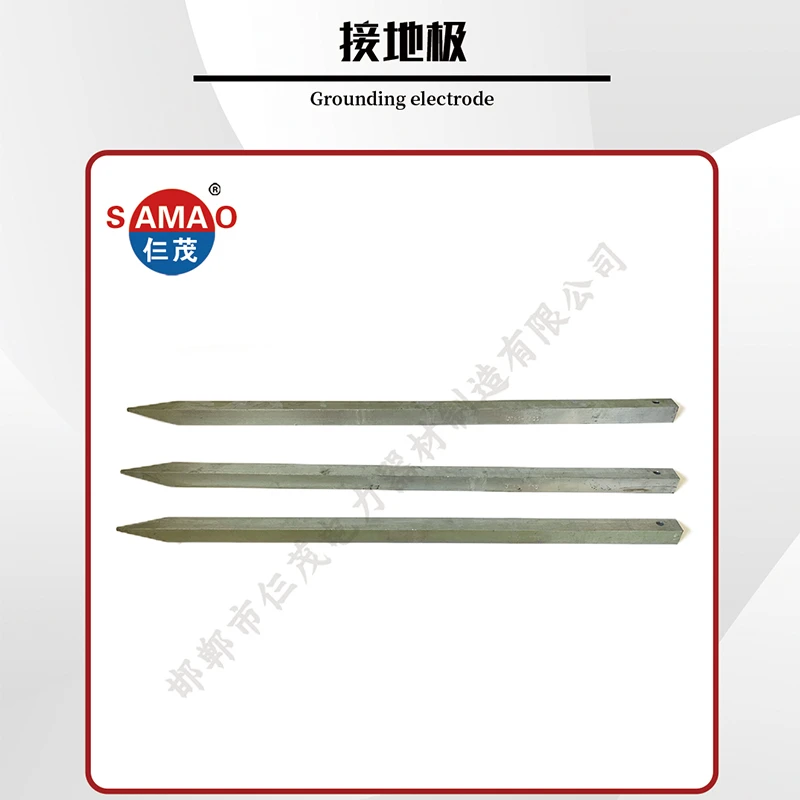
If you work around substations, PV farms, or telecom towers, you already know this: soil doesn’t always play nice. To be honest, the term “chem rod” gets thrown around loosely. In practice, many teams use a galvanized steel angle or copper-bonded rod plus backfill (bentonite, conductive cement, carbon-based compounds) to achieve “chemical” performance. The Grounding Electrode from Hebei’s Yongnian District—manufactured in the Standard Parts Entrepreneurship Park, Dongmingyang Village, Linmingguan Town—leans on a straightforward recipe: multiple 2.5 m, 45×45 mm galvanized angle steels, driven into the bottom of an ≈800 mm-deep trench and bonded with a lead wire. Simple, rugged, and—surprisingly—consistently effective.
Why teams still bet on galvanized angle steel
In fact, angle steel gives you broad surface area, sturdy mechanical performance, and predictable corrosion behavior. Many customers say installation crews finish faster than with exotic chemical electrodes. And when paired with smart backfill, the system behaves a lot like a chem rod grounding electrode—without the price premium.
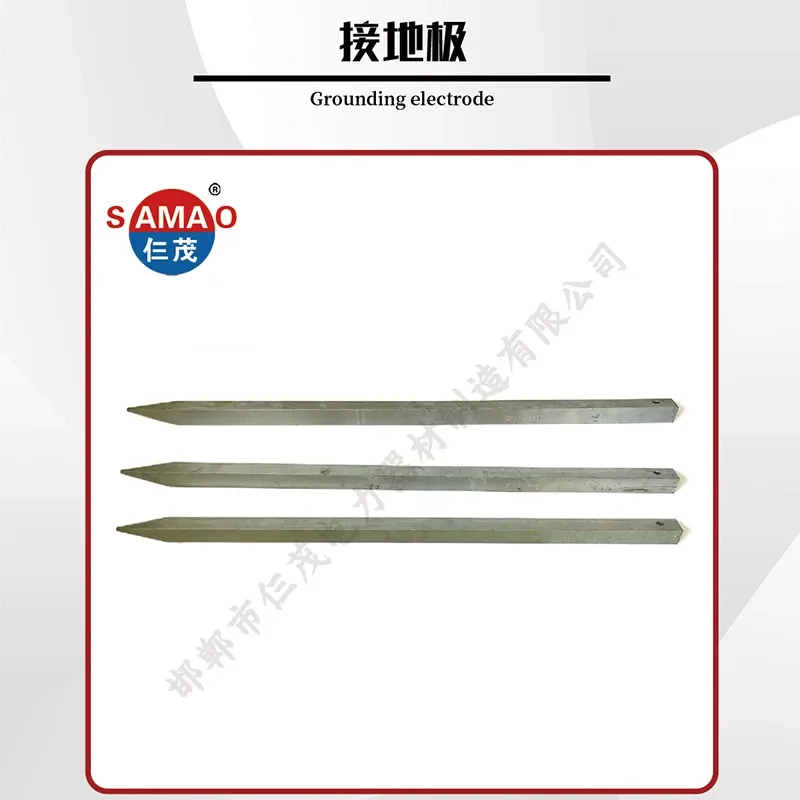
Typical specs (field-friendly, nothing exotic)
| Core material | Q235 galvanized angle steel, 45×45 mm |
| Length per section | 2.5 m (modular, stackable) |
| Coating | Hot-dip galvanizing (ISO 1461 / GB/T 13912), ≈70–85 μm, real-world use may vary |
| Installation trench | ≈800 mm deep; lead wire bonded via exothermic weld or bolted clamp (UL 467-type) |
| Service life | ≈20–30 years in moderate soils; aggressive soils need backfill/maintenance |
| Testing methods | Soil resistivity by Wenner (IEEE 81); ground resistance by fall-of-potential; coating by thickness gauge |
Process flow—what actually happens on site
- Survey & design: soil resistivity map; layout per IEEE 80 / IEC 60364-5-54.
- Materials prep: angle steel cut to 2.5 m; hot-dip galvanizing QC (spark test, thickness spot-check).
- Installation: dig ≈800 mm trench; drive or nail angles at spacing dictated by target R (ohms); bond with tinned copper lead.
- Backfill: native soil, bentonite, or conductive concrete depending on moisture profile—classic chem rod grounding electrode approach.
- Testing: initial fall-of-potential; step/touch checks for substations; document as-built.
Where it’s being used
Power distribution yards, wind/PV plants, railway signaling, data centers, BTS sites, and small industrial plants. Feedback I hear a lot: crews like the predictable driving behavior and the way angles “bite” into mixed gravelly soils.
Vendor snapshot (informal but useful)
| Vendor | Material/Geometry | Coating | Lead time | Certs/Notes |
|---|---|---|---|---|
| Samao EP (Hebei) | Q235, 45×45 mm angles | Hot-dip Zn ≈70–85 μm | ≈7–12 days | GB/T 13912; IEC 62561 awareness |
| Generic Local A | Mixed steel grades | Galv. ≈50–70 μm | ≈3–4 weeks | Basic factory QC |
| Importer B | Copper-bonded rods | Cu-bond ≈250 μm | ≈5–7 weeks | UL 467 listing |
Real-world result (quick case)
Telecom site on sandy loam, northern China. Baseline ground resistance: 12.8 Ω. After installing four 2.5 m galvanized angles with carbon backfill and bonding to the ring conductor, measured 3.6 Ω (fall-of-potential, 62% rule). Seasonal drift stayed between 3.4–4.2 Ω over 9 months—good enough for the operator’s SLA, without resorting to more expensive “chemical” cartridges. That’s the pragmatic charm of a chem rod grounding electrode-style solution built with standard parts.
Compliance, testing, and documentation
Design teams reference IEEE Std 80 for grid safety, IEEE 81 for soil/ground tests, IEC 62561 for components, and UL 467 for bonding hardware. In China, GB 50057 guides lightning protection; hot-dip galvanizing quality aligns with GB/T 13912. Keep your test sheets—inspectors will ask.
Origin note: Manufactured in Standard Parts Entrepreneurship Park, Dongmingyang Village, Linmingguan Town, Yongnian District, Handan City, Hebei Province.
Citations
- IEEE Std 80-2013: Guide for Safety in AC Substation Grounding.
- IEEE Std 81-2012: Guide for Measuring Earth Resistivity, Ground Impedance, and Earth Surface Potentials.
- IEC 60364-5-54: Low-voltage electrical installations—Earthing arrangements and protective conductors.
- IEC/EN 62561 series: Lightning protection system components—Earth termination parts.
- UL 467: Grounding and Bonding Equipment.
- GB 50057-2014: Design Code for Protection of Structures against Lightning (China).
- GB/T 13912-2020: Hot dip galvanized coatings on fabricated iron and steel articles.
-
Laundry Efficiency Guide with pengapit ampaian dengan cangkuk iNewsApr.16,2026
-
Optimizing Power Infrastructure with the pengapit ampaian tnbNewsApr.09,2026
-
Comprehensive Guide to Selecting the Right pengapit penggantungan untuk kabel lt ab SolutionsNewsApr.07,2026
-
Comprehensive Guide to Pengapit Talian Penghantaran for Secure Package DeliveryNewsApr.04,2026
-
Comprehensive Guide to Pemasangan Pengapit Penggantungan for Overhead Cabling SystemsNewsMar.31,2026
-
Comprehensive Guide to Pengapit Ampaian yang Telah Dibentuk for Construction SafetyNewsMar.28,2026
-
Comprehensive Guide to Pengapit Ampaian Besi for Scaffolding SafetyNewsMar.26,2026