Chem Rod Grounding Electrode: Lower Ohms, Longer Life?
Chem Rod vs. Angle-Steel Grounding: What’s Really Working in the Field
If you’re weighing a chem rod grounding electrode against a classic galvanized angle-steel array, you’re not alone. I’ve been on quite a few muddy job sites lately, and—surprisingly—the “old-school” approach is having a quiet comeback where budgets, safety audits, and long-term maintenance all collide.
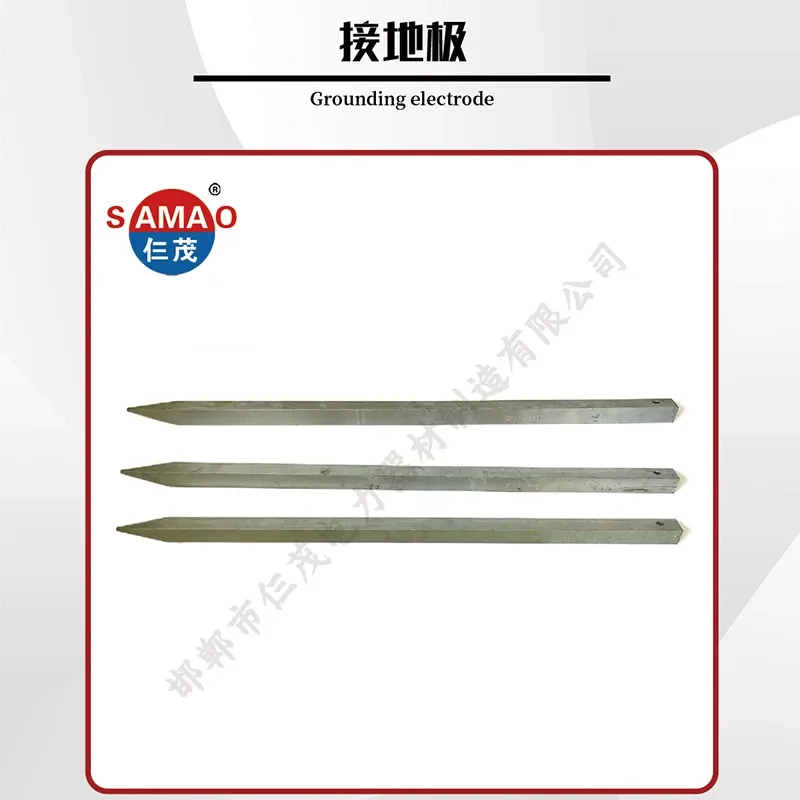
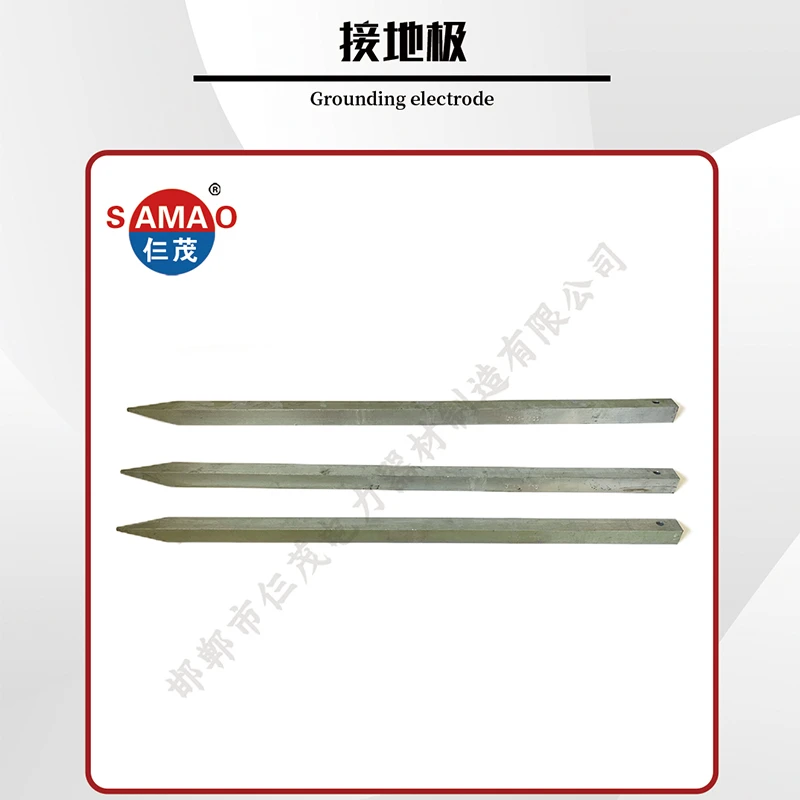
Here’s the product I’ve been reviewing on the ground: Grounding Electrode from Samao EP (origin: Standard Parts Entrepreneurship Park, Dongmingyang Village, Linmingguan Town, Yongnian District, Handan City, Hebei Province). In electrical engineering practice, it’s a modular set of 2.5 m long, 45×45 mm galvanized angle steels, nailed into the bottom of an ≈800 mm deep trench, with a lead conductor brought out. Simple? Yes. But the install discipline and testing make the difference.
Product Specs (Field-Ready)
| Electrode material | Hot-dip galvanized angle steel |
| Dimensions | 45×45 mm, length 2.5 m (per piece) |
| Galvanizing thickness | ≈ 70–90 μm (ISO 1461 real-world range) |
| Trench depth | ≈ 0.8 m (site conditions may vary) |
| Connections | Exothermic weld or bolted with anti-corrosion mastic |
| Service life | ≈ 25–35 years in neutral soil; 10–20 in highly aggressive soil |
| Testing | Earth resistance per IEC 62561-2; soil resistivity per IEEE Std 81 |
Process Flow (How Teams Actually Build It)
- Materials: angle steels, GI tape or copper conductor, exothermic welding kits, anti-corrosion wrap.
- Methods: stake 2.5 m angles in a ring or radial array; join with welded/bolted bonds; lead out to main bar.
- Testing: soil resistivity (Wenner 4-point), step/touch review (IEEE Std 80), earth resistance verification (clamp or fall-of-potential).
- Service life management: coat connections; periodic inspection every 2–3 years; re-test after major earthworks.
- Industries: substations, telecom towers, PV farms, data centers, rail, petrochem midstream.
Real-World Test Snapshot
Handan site, loam soil (~150 Ω·m). Six 2.5 m angles in a ring with two radials achieved 1.8 Ω at 20°C; seasonal drift measured 1.8–2.4 Ω. To be honest, that’s solid for typical utility specs (≤4 Ω) and often enough for NEC Article 250 compliance.
Vendor/Technology Comparison
| Vendor/Type | Construction | Best-fit soils | Maintenance | Service life | Certs/Refs |
|---|---|---|---|---|---|
| Samao EP Angle-Steel | 45×45 mm GI angles in ring/radials | Most soils; scalable layout | Low; inspect joints | ≈25–35 yrs | IEC 62561-2, NEC 250 |
| chem rod grounding electrode (generic) | Porous rod with electrolyte backfill | Very high resistivity (>1000 Ω·m) | Medium; refill checks in arid zones | ≈15–25 yrs (soil dependent) | UL 467 variants; local codes |
| Copper-bonded rod | Steel core, copper cladding | General purpose | Low | ≈20–30 yrs | UL 467, IEC 62561-2 |
Where Each Shines
- Angle-steel grids: substations, fenced yards, PV arrays; easy to expand.
- chem rod grounding electrode: remote towers in rocky or arid terrain where you need ultra-low R with smaller footprint.
Customization (What buyers ask for)
Custom lengths (2.0–3.0 m), heavier zinc (≥100 μm for coastal sites), copper-bonded leads, exothermic kits, and as-built test reports. Many customers say the as-built dossier—photos, GPS, resistance logs—is what clinches audits.
Quick Case Notes
- Telecom hilltop (rocky): two chem rod grounding electrode units plus a short ring hit 3.0 Ω (from 9.6 Ω baseline). Seasonal stability was decent.
- PV farm (loam): GI angle ring with four radials achieved 1.6–2.2 Ω; zero maintenance in first 18 months.
Compliance, Certifications, Feedback
Standards referenced on projects include IEC 62561-2 for earth electrodes, UL 467 for grounding equipment, IEEE Std 81 for measurement, and IEEE Std 80 for safety considerations. Factory typically runs ISO 9001; hot-dip per ISO 1461. Customer feedback? “No drama installs” and “predictable test numbers,” which—honestly—is what you want from grounding.
- IEEE Std 80-2013: Guide for Safety in AC Substation Grounding.
- IEEE Std 81-2012: Guide for Measuring Earth Resistivity and Ground Impedance.
- IEC 62561-2:2018, Lightning protection system components (Earth electrodes).
- UL 467: Grounding and Bonding Equipment.
- NFPA 70 (NEC) 2023, Article 250: Grounding and Bonding.
- GB 50057-2010: Design Code for Protection of Structures against Lightning.
-
Laundry Efficiency Guide with pengapit ampaian dengan cangkuk iNewsApr.16,2026
-
Optimizing Power Infrastructure with the pengapit ampaian tnbNewsApr.09,2026
-
Comprehensive Guide to Selecting the Right pengapit penggantungan untuk kabel lt ab SolutionsNewsApr.07,2026
-
Comprehensive Guide to Pengapit Talian Penghantaran for Secure Package DeliveryNewsApr.04,2026
-
Comprehensive Guide to Pemasangan Pengapit Penggantungan for Overhead Cabling SystemsNewsMar.31,2026
-
Comprehensive Guide to Pengapit Ampaian yang Telah Dibentuk for Construction SafetyNewsMar.28,2026
-
Comprehensive Guide to Pengapit Ampaian Besi for Scaffolding SafetyNewsMar.26,2026