Chem Rod Grounding Electrode — Low-Resistance, Long-Life
Field notes on modern grounding: what’s working for utilities and data sites
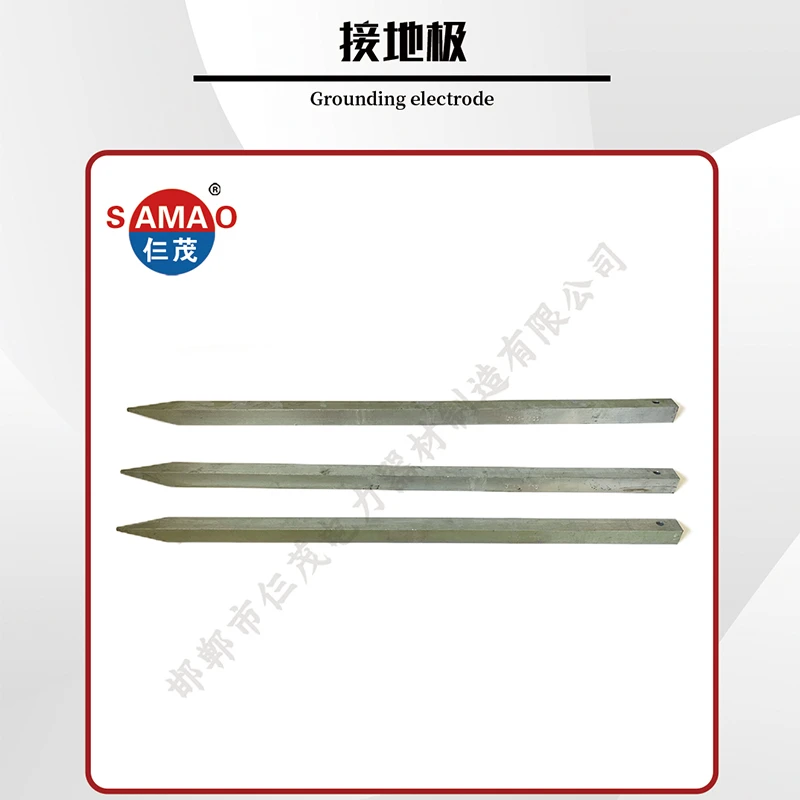
If you’ve spent time chasing down stubborn earth resistance numbers, you know the drill: soil is moody, seasons shift, and specs don’t always match reality. Lately, I’ve seen more engineers asking about the Chem Rod Grounding Electrode category—sometimes as a catch‑all term for advanced electrodes, sometimes very literally. The product I’m looking at today is a practical, angle‑steel array sold simply as “Grounding Electrode,” but many customers casually call it a Chem Rod Grounding Electrode anyway. Semantics aside, the performance is what matters.
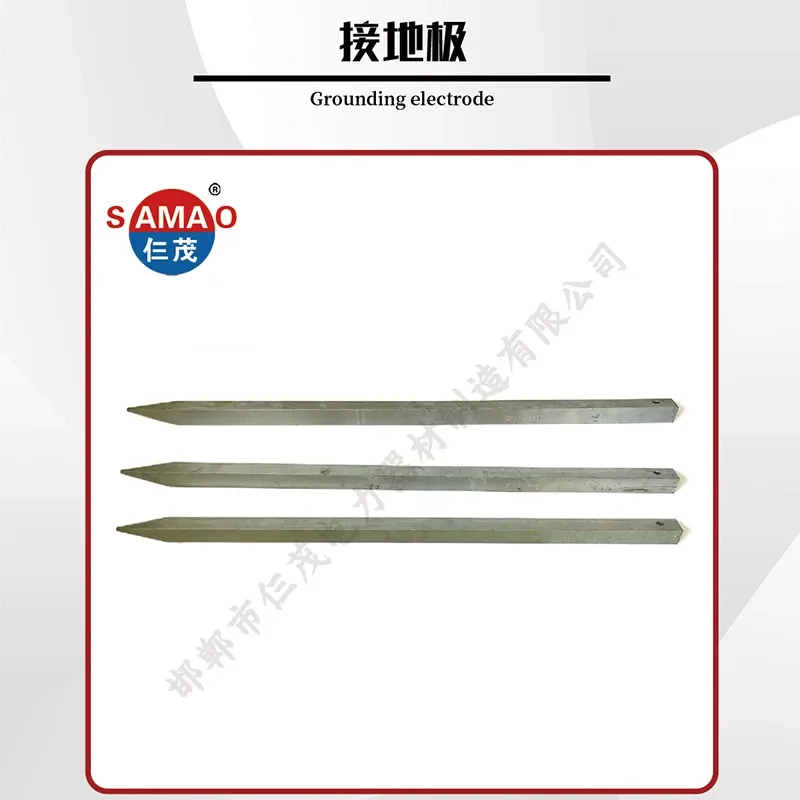
What it is (and where it comes from)
Origin: Standard Parts Entrepreneurship Park, Dongmingyang Village, Linmingguan Town, Yongnian District, Handan City, Hebei Province. Structure: multiple 2.5 m, 45×45 mm galvanized angle steels installed at the bottom of an ≈800 mm deep trench, bonded together and led out with a tinned-copper lead. It’s simple, rugged, and—when installed right—surprisingly effective for substations, telecom shelters, PV plants, and factory main earth grids.
Typical specifications (real‑world values may vary)
| Segment length | 2.5 m per angle steel (modular) |
| Angle size | 45×45 mm, galvanized steel; zinc coat ≈70–100 μm |
| Trench depth | ≈800 mm (deeper where frost line/rock dictates) |
| Lead conductor | Tinned copper 35–50 mm²; exothermic or compression bond |
| Target earth resistance | ≈0.5–5 Ω depending on soil ρ and grid size (design‑dependent) |
| Service life | ≈15–30 years; corrosive soils may shorten life |
| Compliance targets | NEC 250, UL 467, IEEE Std 80/81, IEC 62561 (project‑specific) |
Process flow: how teams actually install it
- Soil study: Wenner 4‑pin resistivity testing per IEEE Std 81; sample at multiple spacings.
- Layout: trench routing to avoid utilities; bond points mapped for low impedance.
- Materials: galvanized angle steels, connectors, tinned leads, exothermic shots or lugs.
- Methods: drive/anchor angles to trench bottom; bolt or weld sections; backfill (some add low‑resistivity backfill where allowed).
- Testing: 3‑point fall‑of‑potential and clamp‑on loop checks; continuity/megger as needed.
- Documentation: record R, soil ρ, photos, weld batch numbers, and coating thickness checks.
Where it’s used and why
Utilities and PV operators like the grid‑style geometry; telecom likes the price/performance. In sandy/coastal sites, I’ve seen crews add bentonite around the array for a quicker drop in Ω (to be honest, maintenance becomes a discussion there). Many EPCs say the Chem Rod Grounding Electrode approach—whether chemical or angle‑steel array—shines when soil resistivity is >100 Ω·m.
Vendor/type comparison (indicative)
| Option | Material | Resistance drop | Maintenance | Notes |
|---|---|---|---|---|
| SAMAOEP angle‑steel array | Galvanized angle steel | Good in medium soils | Low | Cost‑effective; scalable length |
| Copper‑clad steel rod | CCS 14–19 mm | Moderate | Low | Fast install; may need more rods |
| Chemical “chem‑rod” type | Electrolyte‑filled | High in dry soils | Medium (re‑charge) | Excels in arid sites; watch refills |
| Stainless grid | 304/316 | Moderate | Low | Corrosion‑resistant; higher capex |
Customization options
Lengths 2.0–3.0 m; heavier zinc coat for coastal soils; pre‑drilled bonding holes; exothermic kits; CAD files. For strict specs, ask for UL 467 listings, coating certificates, and weld shot traceability. Many buyers also request factory pull tests and mill certs—smart move, honestly.
Case snapshot: PV plant in loamy soil
Baseline soil ρ ≈ 120 Ω·m. Mixed array of Chem Rod Grounding Electrode (angle‑steel sections) around inverter stations. Post‑install fall‑of‑potential: from 9.8 Ω to 2.7 Ω at MTS; touch/step criteria checked per IEEE Std 80. The EPC told me maintenance stayed near zero the first year—no re‑charges, no surprises.
Testing, standards, and service life
Design with IEEE Std 80; verify with IEEE Std 81 methods; meet NEC Article 250 and UL 467 hardware requirements; for lightning interfaces, align with IEC 62561. Service life depends on soil chemistry; where chlorides are high, consider thicker zinc or alternative alloys and schedule annual resistance trending.
Citations
- NFPA 70, National Electrical Code, Article 250. https://www.nfpa.org/
- IEEE Std 80-2013, IEEE Guide for Substation Grounding. https://standards.ieee.org/
- IEEE Std 81-2012, Guide for Measuring Earth Resistivity and Grounding Impedance. https://standards.ieee.org/
- UL 467, Grounding and Bonding Equipment. https://ulstandards.ul.com/
- IEC 62561, Lightning protection system components. https://www.iec.ch/
-
Laundry Efficiency Guide with pengapit ampaian dengan cangkuk iNewsApr.16,2026
-
Optimizing Power Infrastructure with the pengapit ampaian tnbNewsApr.09,2026
-
Comprehensive Guide to Selecting the Right pengapit penggantungan untuk kabel lt ab SolutionsNewsApr.07,2026
-
Comprehensive Guide to Pengapit Talian Penghantaran for Secure Package DeliveryNewsApr.04,2026
-
Comprehensive Guide to Pemasangan Pengapit Penggantungan for Overhead Cabling SystemsNewsMar.31,2026
-
Comprehensive Guide to Pengapit Ampaian yang Telah Dibentuk for Construction SafetyNewsMar.28,2026
-
Comprehensive Guide to Pengapit Ampaian Besi for Scaffolding SafetyNewsMar.26,2026