Chem Rod Grounding Electrode – Low Resistance, Long Life
Chem Rod Grounding Electrode: Field Notes, Specs, and Real-World Lessons
If you work in power or data infrastructure, you already know the grounding debate never ends. Lately, more engineers ask whether a chem rod grounding electrode is worth the premium versus a well-built steel or copper bond system. Short answer: it depends on soil, installation discipline, and lifecycle priorities. Here’s what I’ve seen on sites from steel mills to edge data huts in windy plains.
What’s changing in grounding
- Spec drift toward verifiable testing (fall‑of‑potential) and soil models, not just “drive a rod and pray.”
- Hybrid designs: conventional galvanized electrodes + conductive backfill to approach chemical-rod performance.
- Compliance-first bids: IEC 62561, IEEE 80/81, and UL 467 are increasingly mandatory.
How this product is built (the practical bits)
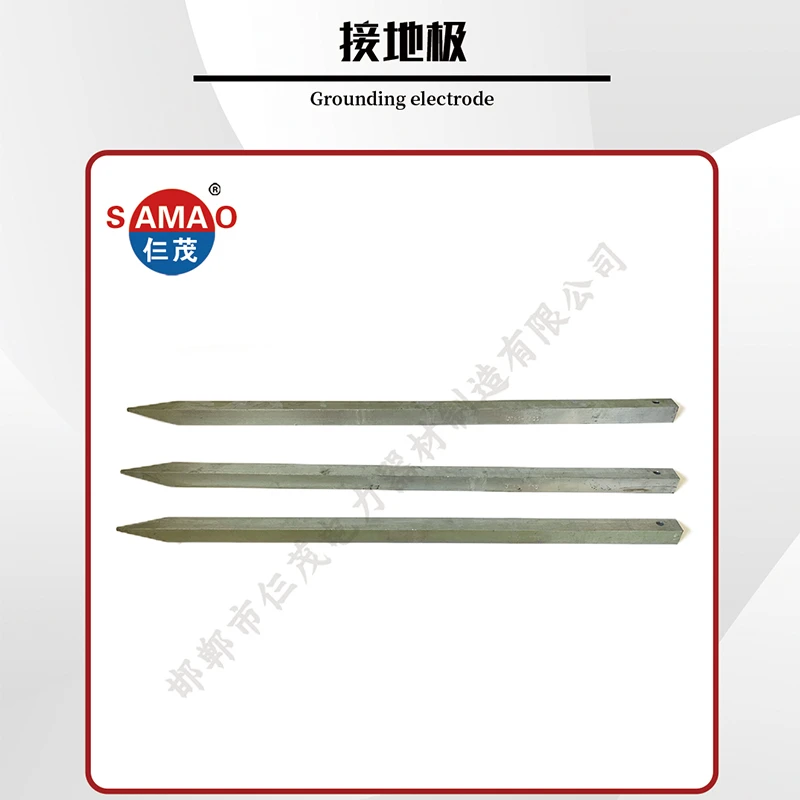
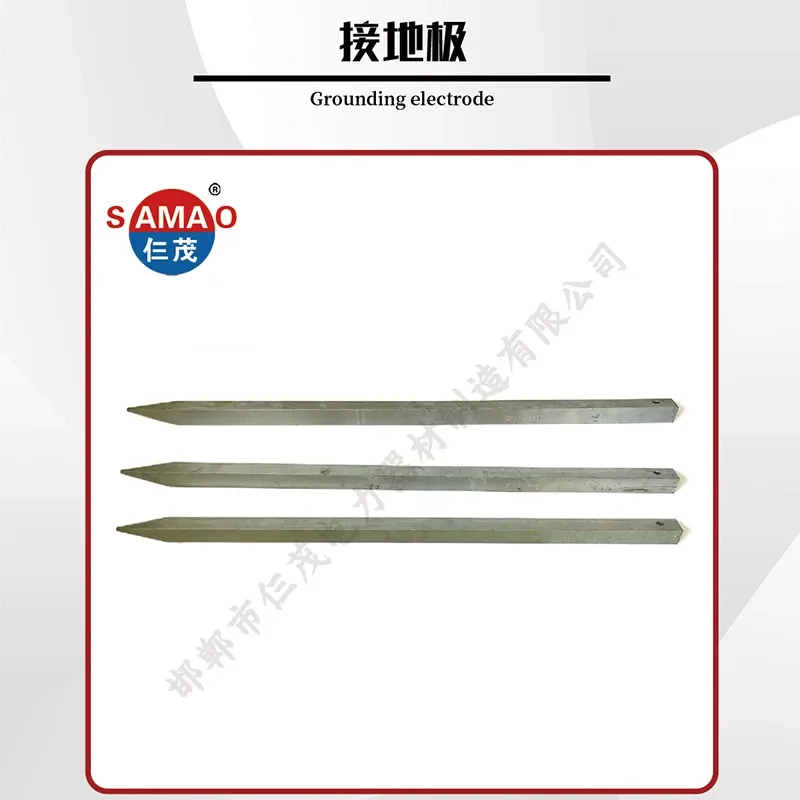
Origin: Standard Parts Entrepreneurship Park, Dongmingyang Village, Linmingguan Town, Yongnian District, Handan City, Hebei Province. The unit described here is an angle-steel grounding electrode: multiple 2.5 m sections of 45×45 mm galvanized angle steel, placed in an ≈800 mm deep trench, mechanically “nailed” at the bottom, and bonded with a lead conductor. It’s simple, tough, and—when paired with the right backfill—surprisingly competitive against pricier chemical rods.
Typical installation flow (field-proven):
- Survey soil resistivity (Wenner 4-point per IEEE 81).
- Excavate trench ≈0.8 m; de-burr angle steel; check galvanization thickness.
- Drive/anchor 2.5 m sections; overlap bonds; exothermically weld lead wire or use UL‑listed clamps.
- Optional: add bentonite or conductive mineral backfill around the electrode for lower contact resistance.
- Backfill, compact, label, and test earth resistance (52%/62% rule or complete curve).
Product specifications (snapshot)
| Material | Galvanized angle steel, 45×45 mm, L≈2.5 m per section |
| Zinc coating | ≈70–100 μm (real-world use may vary) |
| Trench depth | ≈800 mm |
| Lead connection | Exothermic weld or listed mechanical clamp |
| Service life | 15–30 years depending on soil corrosivity |
| Standards guidance | NEC 250, IEEE 80/81, IEC 62561-2, UL 467 (for components) |
Testing, data, and what we measured
On a utility sub-lot with clay-loam (ρ ≈ 70–120 Ω·m), two parallel angle-steel electrodes (10 m spacing) with bentonite backfill achieved 1.9–2.3 Ω at 62% probe spacing. The same site, without backfill, landed around 3.8 Ω. Repeat tests followed IEEE Std 81; bonding inspected to UL 467 practices.
Where it’s used
- Telecom and 5G edge sites (compact footprints).
- Industrial MCC rooms and substation fence grounds.
- Renewables: inverter pads and battery enclosures.
- Lightning protection system (LPS) earth terminations.
Vendor landscape (quick take)
| Vendor/Type | Core tech | Target soil | Certs (typ.) | Notes |
|---|---|---|---|---|
| SAMAO Angle-Steel Electrode | Galvanized angle + optional conductive backfill | 50–300 Ω·m | ISO 9001 factory; components to UL 467 | Cost-effective; easy to scale horizontally |
| nVent ERICO ChemRod | Chemical electrode with electrolytic salts | High ρ or rocky sites | UL 467; IEC 62561 (per datasheets) | Lower resistance per rod; higher unit cost |
| Copper-Bonded Rod (generic) | Steel core with copper cladding | Moderate soils | UL 467 | Classic choice; watch corrosion in acidic soils |
Customization
- Angle size and section length; hot-dip zinc thickness.
- Factory pre-attached pigtails; exothermic kits.
- Backfill kits (bentonite/graphite) to emulate chem rod grounding electrode performance.
Field notes and feedback
“We replaced three copper-bonded rods with two angle-steel runs plus bentonite and hit 2.1 Ω,” one contractor told me—pleasantly surprised. Another cautioned: “Don’t skimp on welds; that’s where failures hide.” Fair point.
Compliance and QA
Aim for UL 467-compliant connectors, verify per IEEE 81 testing, and align with IEC 62561-2 for component performance. Document soil resistivity, test curves, and inspection photos—auditors love evidence, to be honest.
Bottom line: a well-installed angle-steel system, especially with conductive backfill, can rival a chem rod grounding electrode in many soils—often at a friendlier price per ohm.
References
- IEEE Std 81: Guide for Measuring Earth Resistivity, Ground Impedance, and Earth Surface Potentials.
- IEEE Std 80: Guide for Safety in AC Substation Grounding.
- IEC 62561-2: Lightning protection system components (Earth termination and conductors).
- UL 467: Grounding and Bonding Equipment.
- NEC (NFPA 70) Article 250: Grounding and Bonding.
- IEEE Std 142 (Green Book): Grounding of Industrial and Commercial Power Systems.
-
Laundry Efficiency Guide with pengapit ampaian dengan cangkuk iNewsApr.16,2026
-
Optimizing Power Infrastructure with the pengapit ampaian tnbNewsApr.09,2026
-
Comprehensive Guide to Selecting the Right pengapit penggantungan untuk kabel lt ab SolutionsNewsApr.07,2026
-
Comprehensive Guide to Pengapit Talian Penghantaran for Secure Package DeliveryNewsApr.04,2026
-
Comprehensive Guide to Pemasangan Pengapit Penggantungan for Overhead Cabling SystemsNewsMar.31,2026
-
Comprehensive Guide to Pengapit Ampaian yang Telah Dibentuk for Construction SafetyNewsMar.28,2026
-
Comprehensive Guide to Pengapit Ampaian Besi for Scaffolding SafetyNewsMar.26,2026