Best parallel groove clamp for reliable, low-loss power?
Field Notes on the parallel groove clamp: what utilities actually care about
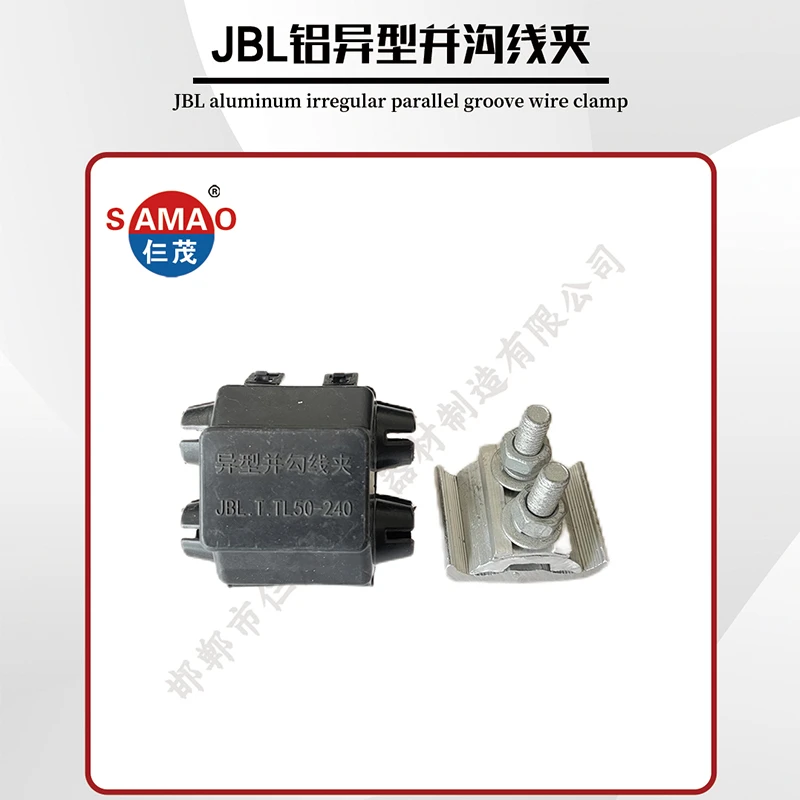
If you work around overhead lines long enough, you start to notice what survives storms, salt, and hurried maintenance—and what doesn’t. The parallel groove clamp (PG clamp) keeps showing up in the “still working” column. It’s a simple idea: two grooved aluminum alloy plates, a couple of bolts, and a job—to connect conductors or lightning downleads where no tension load is required.
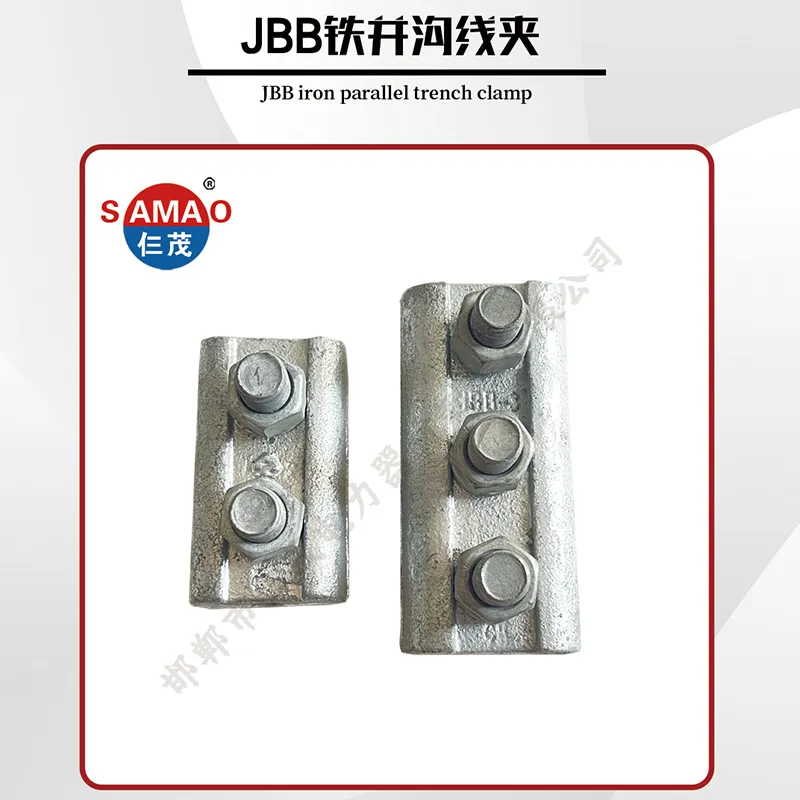
Why the market is leaning harder on PG clamps
Electrification projects and distributed solar are creating miles of tap connections. To be honest, crews prefer components that go on fast, pass audit, and don’t come back as callbacks. The parallel groove clamp fits: low-resistance contact, reusable hardware, and visible torque control. Many customers say thermal stability matters more than ever; I’d agree. Utilities are now specifying IEC/ANSI thermal-cycle performance as a baseline, not a bonus.
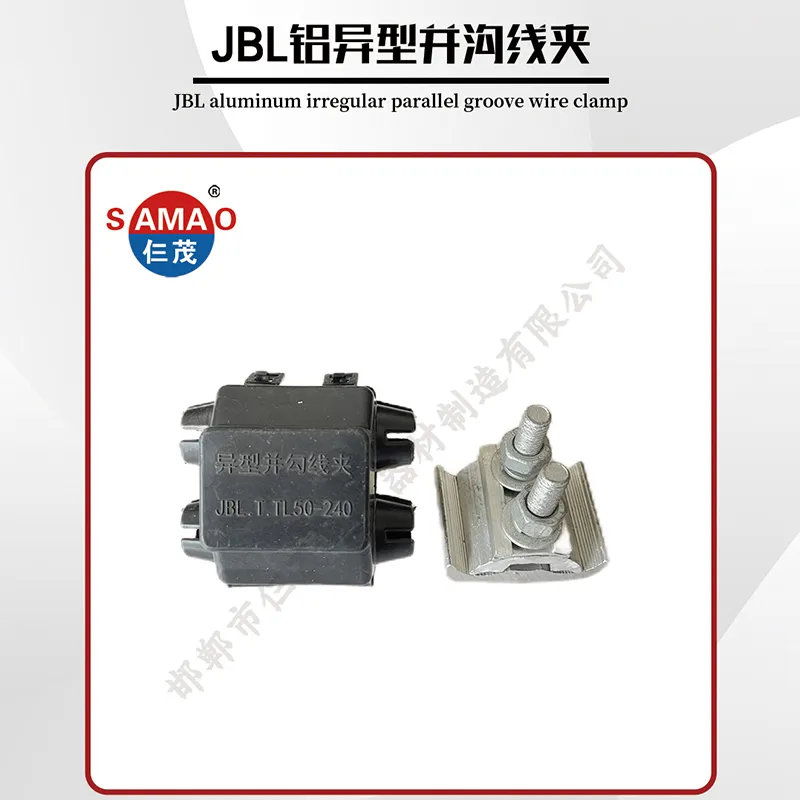
Typical specs (real-world use may vary)
| Model | Conductor Range (Al/Cu) | Bolt/Material | Recommended Torque | Contact Resistance |
|---|---|---|---|---|
| PGC-1 | 16–70 mm² | M8, hot-dip galvanized steel | ≈ 18–22 N·m | ≤ 1.5 μΩ after 500 cycles |
| PGC-2 | 35–150 mm² | M10, hot-dip galvanized steel | ≈ 25–30 N·m | ≤ 1.5 μΩ |
| PGC-3 (Cu/Al bimetal) | 50–240 mm² | M12, stainless or HDG steel | ≈ 35–40 N·m | ≤ 2.0 μΩ (salt fog aged) |
Body material: high-strength Al-Mg-Si alloy; optional tin-plated bimetal pads for Cu/Al transitions. Service life: around 20–30 years in temperate zones (coastal use tied to coating choice and maintenance).
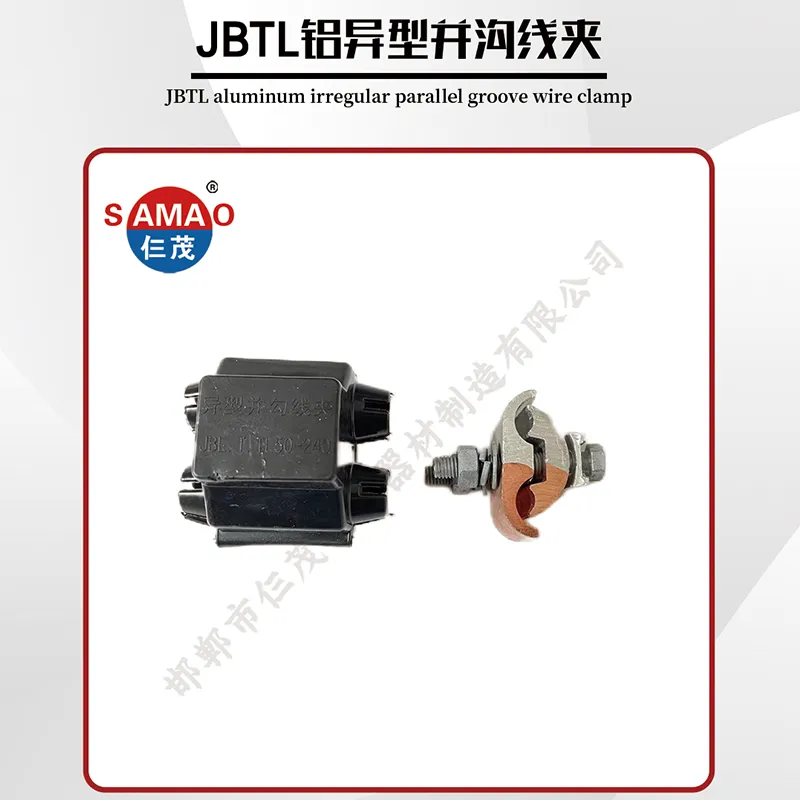
From foundry to pole: process flow
- Materials: Al-Mg-Si alloy castings; galvanized or stainless bolts; serrated spring washers; conductive oxide-inhibiting compound.
- Methods: precision die-casting, CNC surfacing of grooves, deburr + shot cleaning, tin plating for bimetal variants, HDG to ISO 1461 where specified.
- Testing: electrical resistance and heat-rise per IEC 61238-1; mechanical slip (non-tension) checks; salt spray per ASTM B117 (≥ 240–480 h); torque verification; visual per utility specs.
- Traceability: heat/batch codes laser-marked; incoming alloy certs; final QC sheets archived for 10 years.
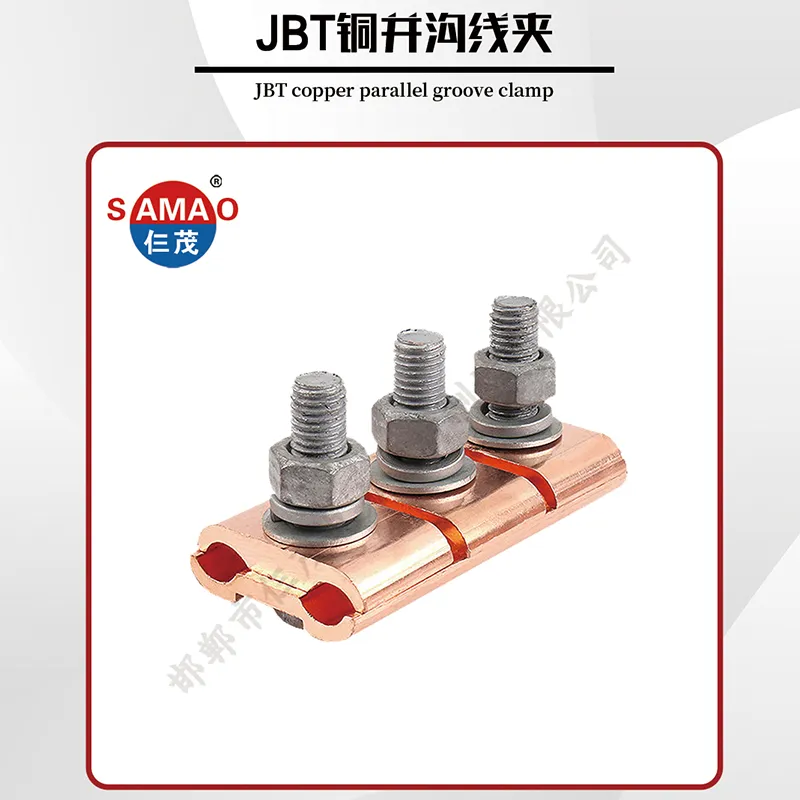
Where the parallel groove clamp fits best
Overhead distribution taps, lightning conductor bonding, substation auxiliary ties, solar farm collector taps, wind OHL retrofits, and rail catenary auxiliaries. It’s explicitly for non-tension joints; for pulls or dead-ends, use purpose-built hardware.
Advantages I’ve seen in the field: fast install (one wrench), predictable torque, minimal hot-spotting, and easy inspection. Feedback from coastal utilities: choose stainless hardware or heavier galvanization, plus sealing grease—saves headaches later.
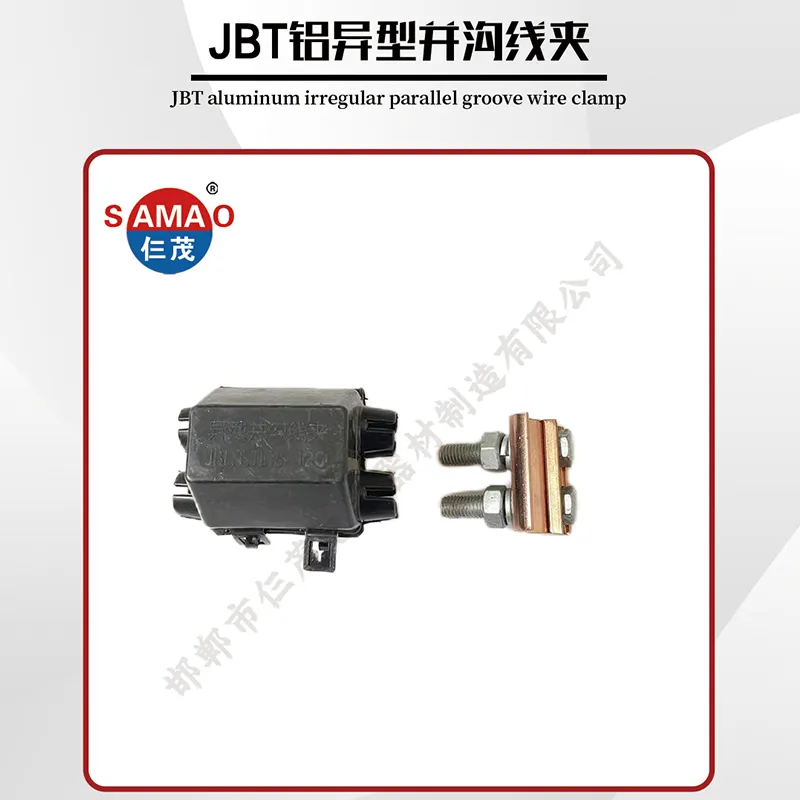
Vendor comparison snapshot
| Vendor | Core Alloy | Surface/Treatment | Torque Window | Certs | Lead Time |
|---|---|---|---|---|---|
| SAMAO (Hebei, China) | Al-Mg-Si | HDG bolts / optional stainless; bimetal pads | 18–40 N·m | IEC 61238-1, ANSI C119.4 | ≈ 10–20 days |
| Vendor B | Al-Si | HDG bolts | 20–35 N·m | ANSI C119.4 | ≈ 3–5 weeks |
Origin note: SAMAO manufactures in the Standard Parts Entrepreneurship Park, Dongmingyang Village, Linmingguan Town, Yongnian District, Handan City, Hebei Province—an area with deep fastener and fittings expertise.
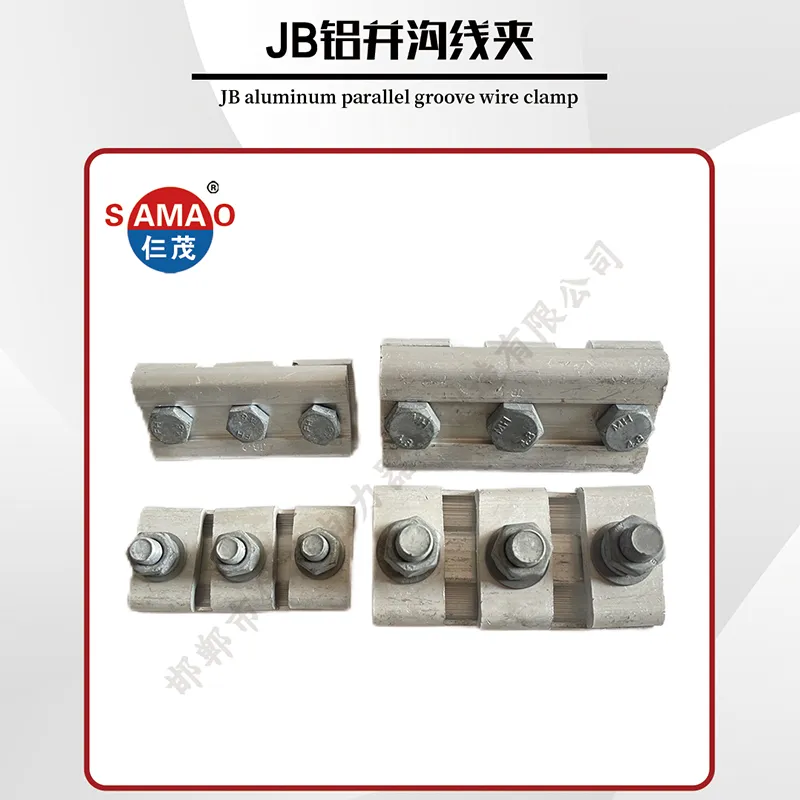
Customization and real project results
- Customization: conductor size match-ups (mixed ranges), Cu/Al bimetal inserts, torque-limiting shear nuts, marine-grade hardware, branding/lot coding.
- Case—Coastal wind: 480-hour ASTM B117 variant with stainless bolts cut corrosion-related rework by ≈ 37% over 18 months (utility maintenance logs).
- Case—Urban distribution: tin-plated bimetal parallel groove clamp used for Al-to-Cu taps; thermal rise stayed within +7–9°C at 150% rated current during audit tests.
Compliance & standards: Designed to IEC 61238-1 thermal-cycle criteria; tested to ANSI C119.4 Class AA/AA for like metals and Cu/Al as specified; coatings to ISO 1461; corrosion screening to ASTM B117. Common certifications: ISO 9001, RoHS/REACH material declarations.
Bottom line: if your spec calls for a reliable non-tension connector with predictable heat-rise and easy inspection, the parallel groove clamp remains the uncomplicated choice—honestly, that’s the appeal.
Authoritative citations
- IEC 61238-1: Compression and mechanical connectors for power cables.
- ANSI C119.4: Electric Connectors—Al-to-Al and Al-to-Cu, tests and requirements.
- ASTM B117: Standard Practice for Operating Salt Spray (Fog) Apparatus.
- ISO 1461: Hot dip galvanized coatings on fabricated iron and steel articles.
-
Laundry Efficiency Guide with pengapit ampaian dengan cangkuk iNewsApr.16,2026
-
Optimizing Power Infrastructure with the pengapit ampaian tnbNewsApr.09,2026
-
Comprehensive Guide to Selecting the Right pengapit penggantungan untuk kabel lt ab SolutionsNewsApr.07,2026
-
Comprehensive Guide to Pengapit Talian Penghantaran for Secure Package DeliveryNewsApr.04,2026
-
Comprehensive Guide to Pemasangan Pengapit Penggantungan for Overhead Cabling SystemsNewsMar.31,2026
-
Comprehensive Guide to Pengapit Ampaian yang Telah Dibentuk for Construction SafetyNewsMar.28,2026
-
Comprehensive Guide to Pengapit Ampaian Besi for Scaffolding SafetyNewsMar.26,2026